
Petrobras profit nearly doubles as revenue and exports surge
Brazil’s state controlled oil major reported R$52.44 billion in second quarter net income, its strongest nominal result since 2022. Higher sales, stronger external revenue and a heavier investment program shaped the quarter.
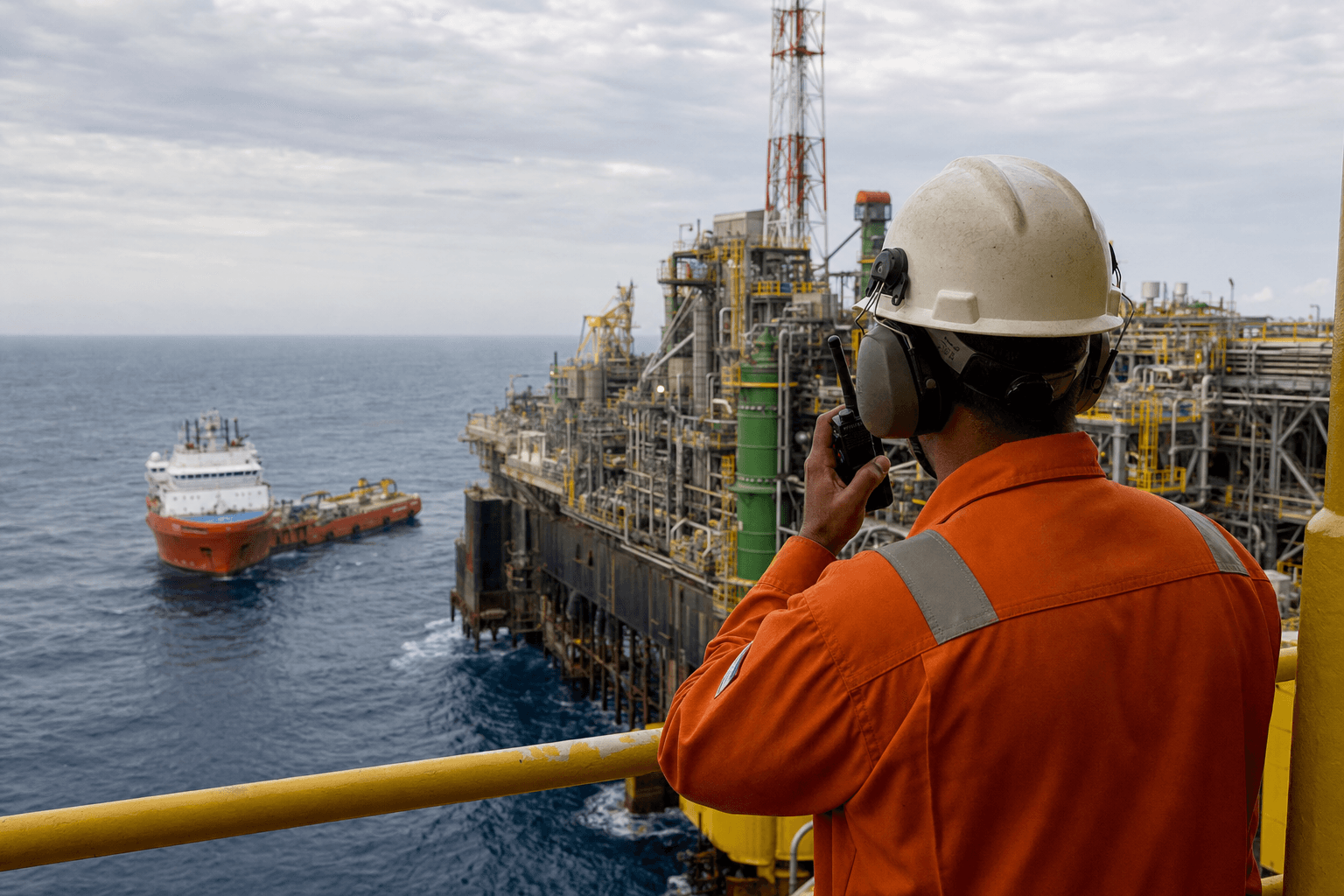
Petrobras closed the second quarter of 2026 with net income of R$52.44 billion, up 96.8% from R$26.65 billion in the same period last year. In nominal terms, meaning before adjusting for inflation, it was the company’s best quarterly profit since the second quarter of 2022.
The result reinforces the scale of Brazil’s largest energy company at a time when oil, fuel pricing, taxation and shareholder returns remain central to the country’s economic debate. Petrobras also announced R$17.4 billion in remuneration to shareholders.
Sales revenue reached R$169.53 billion between April and June, a 42.3% increase from R$119.13 billion a year earlier. The company’s bottom line, however, was affected by a larger tax bill, especially higher expenses tied to the oil export tax, and by a smaller foreign exchange gain as the Brazilian real appreciated less against the U.S. dollar than it had in the comparable quarter of 2025.
Stripping out one off effects, Petrobras reported profit of R$55.76 billion, up 140.5% from R$23.18 billion a year earlier on the same adjusted basis. Adjusted Ebitda, earnings before interest, taxes, depreciation and amortisation, rose 79.6% to R$93.84 billion, compared with R$52.26 billion in the second quarter of 2025.
Financial result and balance sheet
The financial line was less supportive than it had been a year earlier. Petrobras posted a net financial result negative by R$1.52 billion in the quarter, reversing a positive R$5.57 billion in the second quarter of 2025 and a positive R$7.86 billion in the first quarter of 2026.
Financial revenue came in at R$1.93 billion. That was 9.7% higher than in the January to March period, but 1.3% lower than a year earlier, reflecting reduced gains from financial investments and Brazilian government bonds. Financial expenses totaled R$5.3 billion, up 2.3% from the previous quarter but down 12.1% year on year.
The main swing factor was foreign exchange. Currency variations contributed a positive R$1.8 billion in the second quarter, far below the R$11.34 billion gain recorded one year earlier, particularly in transactions linked to the real and the dollar.
Petrobras ended June with R$33.56 billion in cash, slightly below the R$34.29 billion held at the end of March. Net debt stood at US$60.39 billion, down 2.7% from US$62.09 billion at the end of the first quarter, but above the US$58.56 billion recorded in June 2025. In reais, net debt declined to R$312.6 billion from R$324.1 billion at the end of March.
Leverage improved. The ratio of net debt to adjusted Ebitda fell to 1.14 times, compared with 1.43 times at the end of March and 1.53 times in June last year.
Fuel sales, subsidies and investment
Domestic fuel operations remained a major source of revenue. Sales of oil derivatives in Brazil generated R$89.5 billion in the second quarter, an increase of 24.7% from R$71.799 billion in the same period of 2025.
Diesel sales revenue rose 9.3% year on year to R$38.262 billion. Gasoline moved in the opposite direction, falling 12.7% to R$15.2 billion. Petrobras also said the average price of basic derivatives in the domestic market increased 23.1% compared with the second quarter of last year.
The company disclosed federal subsidy payments linked to fuel sales, a mechanism created by Brazil’s government to cushion price volatility related to the war in the Middle East. The subsidy for diesel sales totaled R$9.737 billion. Payments related to gasoline reached R$816 million, while liquefied petroleum gas, known as LPG, accounted for R$84 million.
Total domestic market revenue, including products beyond oil derivatives, reached R$104.4 billion, up 21.8% from a year earlier. External market revenue grew faster, rising 95.2% to R$65.07 billion.
Investment also accelerated. Petrobras spent US$5.3 billion in the quarter, 19.6% more than in the second quarter of 2025. Exploration and production absorbed US$4.34 billion of that amount, while refining, transport and commercialisation received US$671 million. Gas and low carbon energy projects accounted for US$135 million.
For the first half of 2026, Petrobras investments totaled US$10.4 billion, a 22.5% increase from the same period last year.
Why this matters for Brazil business
Petrobras is more than a corporate earnings story. Its results influence Brazil’s fiscal outlook, capital markets, fuel distribution chain, offshore suppliers and investor sentiment toward state linked enterprises. The quarter showed a company producing strong cash generation while carrying a large investment agenda and navigating tax, currency and pricing pressures.
For investors and companies assessing opportunities in Brazil’s energy economy, these results are a useful signal of both scale and complexity. Brazil Business Club connects international decision makers with local insight, sector context and trusted networks. If you are looking to invest in, partner with or expand into Brazil, connect with the club to explore the market with people who understand it on the ground.
Doing business in Brazil?
Brazil Business Club connects investors and companies from around the world with the people and opportunities driving Brazil's economy. Tell us what you are looking for and we will help you take the next step.
Reported by the Brazil Business Club newsroom, with reference to Valor Econômico.