
Petrobras moves back into ethanol with Neomille stake
Brazil’s state controlled oil company is re entering ethanol through a stake in Neomille, a leading corn ethanol producer in the country’s Center West. The deal places Petrobras back in a biofuels segment tied closely to Brazil’s grain belt and energy transition agenda.
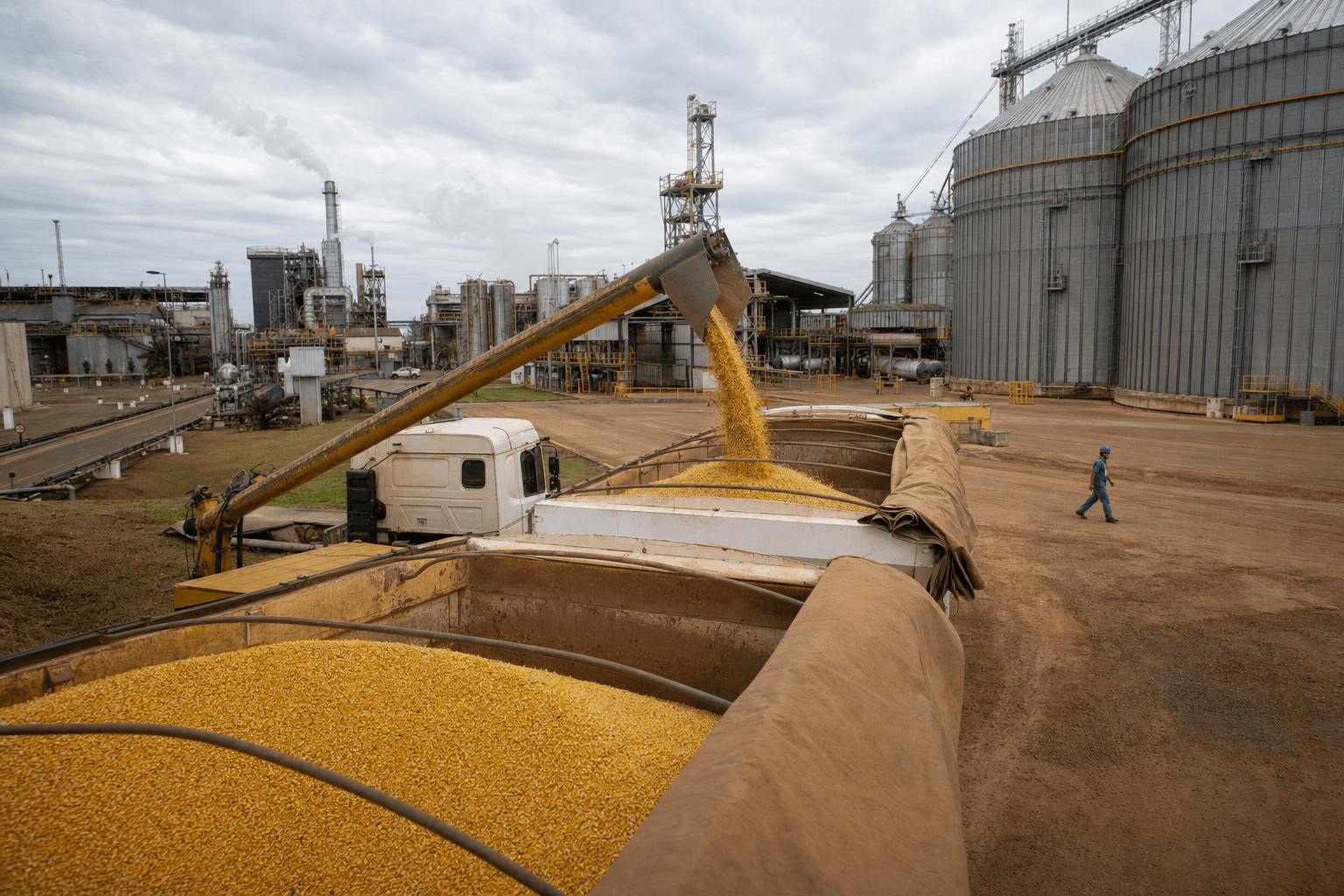
Petrobras is returning to Brazil’s ethanol industry through the acquisition of a stake in Neomille, a corn ethanol producer with operations in the country’s Center West, according to Valor Econômico.
The move marks a fresh step by Brazil’s state controlled oil company into biofuels, at a time when large energy groups are reassessing the role of lower carbon fuels in their portfolios. Petrobras said the deal fits its broader capital allocation strategy. In the company’s words, “the transaction is aligned with the strategy of profitable diversification of the energy portfolio.”
Neomille is, according to Petrobras, the third largest producer of corn ethanol in Brazil. The company operates two plants, one in Chapadão do Céu, in the state of Goiás, and another in Maracaju, in Mato Grosso do Sul. Both states sit in Brazil’s Center West, a region that has become central to the country’s grain economy and is increasingly important for industrial processing linked to agribusiness.
For international investors, the deal is notable not only because of Petrobras’s scale, but also because it connects three strategic Brazilian themes: energy security, biofuels and the industrialisation of agricultural output.
Why Petrobras’s return matters
Petrobras remains one of Brazil’s most important companies and a central actor in the country’s energy policy. Although it is publicly traded, the federal government is its controlling shareholder, which means its investment decisions are watched closely by financial markets, suppliers and policymakers.
Its renewed move into ethanol is therefore more than a portfolio adjustment. It signals that biofuels are likely to remain part of the company’s energy transition toolkit alongside oil and gas, refining and other low carbon initiatives.
Brazil already has one of the world’s most developed ethanol markets, supported by decades of use in transport fuels. Most international readers associate Brazilian ethanol with sugarcane, but corn ethanol has been gaining relevance, particularly in regions where large harvests and logistics networks support year round industrial processing.
That is where Neomille fits. Its plants in Chapadão do Céu and Maracaju are positioned in states with deep links to grain production. Corn ethanol facilities can also generate byproducts used in animal feed, giving the business model exposure to both fuel and agribusiness demand.
Corn ethanol in the Center West
Brazil’s Center West, known locally as the Centro Oeste, includes some of the country’s most productive agricultural areas. Goiás and Mato Grosso do Sul are part of a broader grain corridor that supplies domestic industry and export chains.
For energy companies, that geography matters. Corn ethanol depends on access to feedstock, storage, processing capacity and distribution routes. Locating plants near agricultural supply can reduce logistical friction and help producers integrate more closely with farming regions.
Petrobras did not disclose in the source report the financial terms of the acquisition or the exact size of the stake. What is clear is the strategic direction. By buying into an established producer rather than starting from scratch, Petrobras gains exposure to an operating platform in a segment where scale, feedstock access and local execution are critical.
For companies considering Brazil as an investment destination, the transaction reinforces the importance of regional clusters. Brazil’s energy opportunities are not limited to offshore oil, hydropower or urban fuel distribution. They increasingly include assets embedded in agricultural regions, where bioenergy, logistics and food supply chains overlap.
What investors should watch
The immediate questions for the market will be governance, integration and future capital commitments. Investors will want to know how Petrobras intends to participate in Neomille’s growth, whether additional biofuel acquisitions could follow, and how the company balances these investments with its core oil and gas business.
Regulatory context will also matter. Brazil’s fuel market is shaped by federal blending rules, taxation, state level incentives and environmental programmes. For foreign companies, understanding institutions such as Petrobras, Brazil’s national fuel regulator and state tax systems is essential before entering the sector.
The Petrobras move may also influence how other strategic and financial investors assess corn ethanol assets in Brazil. If the country’s largest energy company sees room for profitable diversification in the segment, infrastructure funds, agribusiness groups and fuel distributors may take a closer look at similar opportunities.
Still, the deal should be read carefully. Petrobras has framed the transaction around diversification with returns, not as a departure from its broader energy base. The company remains anchored in conventional energy, but the Neomille stake gives it a clearer position in a domestic biofuel chain with direct links to Brazil’s agricultural strength.
For international companies, the message is straightforward: Brazil’s energy transition is not only a story of new technologies. It is also unfolding through established industrial assets, regional supply chains and companies that can connect agriculture with fuel demand.
If you are looking to invest in Brazil or build partnerships in the Brazilian energy and biofuels market, connect with Brazil Business Club to explore opportunities, local intelligence and trusted business networks.
Doing business in Brazil?
Brazil Business Club connects investors and companies from around the world with the people and opportunities driving Brazil's economy. Tell us what you are looking for and we will help you take the next step.
Reported by the Brazil Business Club newsroom, with reference to Valor Econômico.