
Petrobras Lifts Búzios Gas Output to New Record
Brazil’s largest offshore oil field is sending more natural gas from existing platforms after upgrades to processing equipment. The gains point to rising value in operational improvements across the country’s pre-salt assets.
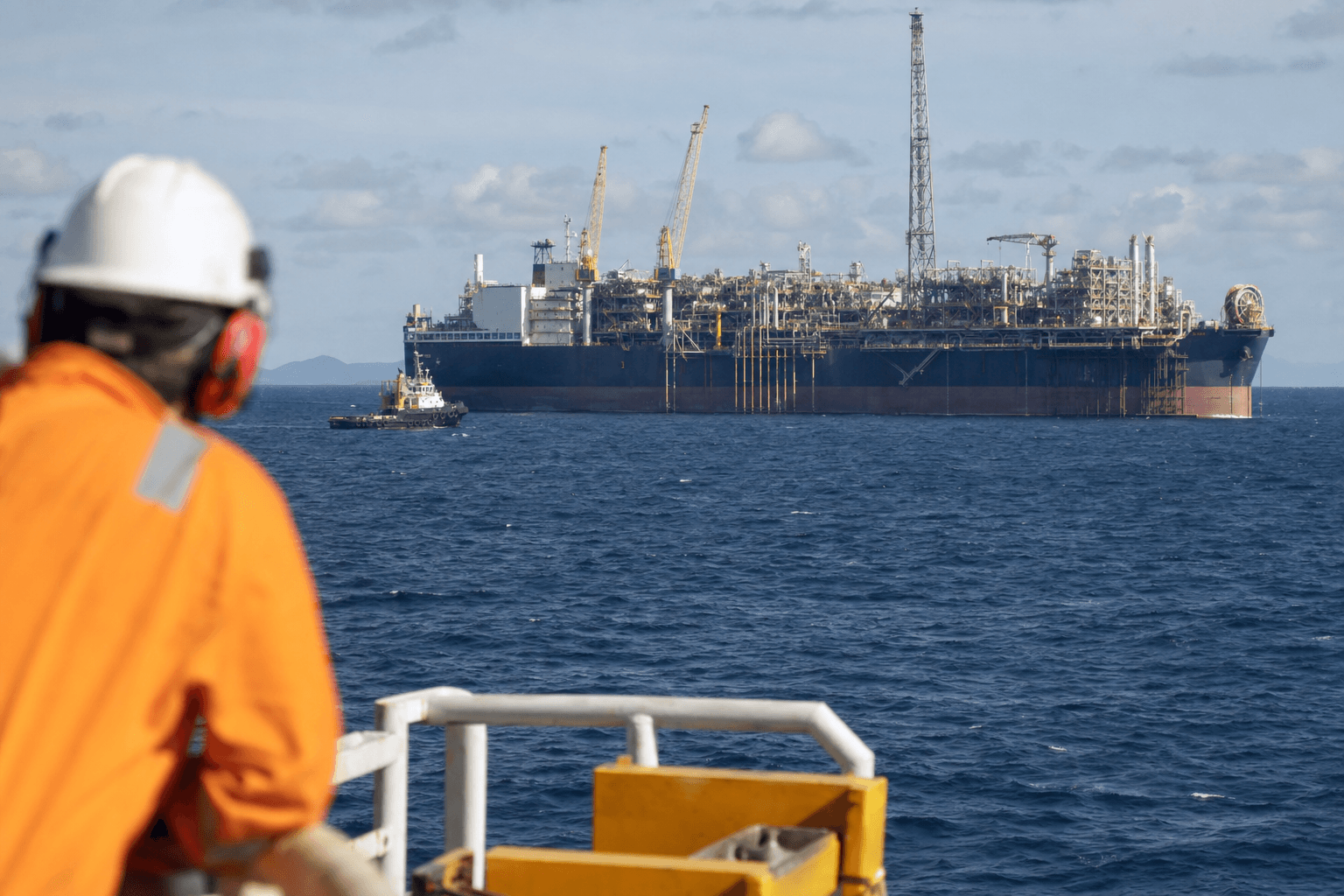
Petrobras has reported a new performance high for natural gas exports from the Búzios field, one of Brazil’s flagship offshore assets in the Santos Basin. The state-controlled oil company said the field averaged more than 10 million cubic meters a day in August, topping the previous monthly mark of 9.1 million cubic meters a day set in March 2026.
The record is notable because Petrobras attributes the increase to better use of installed infrastructure, rather than the start-up of new production systems. For energy companies, service providers and investors following Brazil’s upstream sector, the result highlights how operational upgrades can unlock additional gas from large offshore developments without waiting for the next wave of platforms.
Búzios lies around 180 kilometers off the coast of Rio de Janeiro state, in ultra-deep water at a depth of about 2,100 meters. It is part of Brazil’s pre-salt province, a group of reservoirs found beneath thick layers of salt under the seabed. These fields have become central to the country’s oil and gas production strategy and to Petrobras’s capital allocation plans.
A new monthly and daily benchmark
The August average was not the only record disclosed by Petrobras. On August 6, Búzios reached 14.1 million cubic meters a day in natural gas exports, exceeding the prior daily peak of 13.9 million cubic meters a day registered in July.
In this context, gas exports refer to volumes moved from offshore production units for processing and delivery into Brazil’s gas system, rather than exports in the sense of cross-border trade. For international readers, the distinction matters. Brazil has large offshore gas resources, but the commercial value of that gas depends on treatment capacity, subsea and pipeline infrastructure, and the ability to bring molecules from distant deepwater fields to shore.
Petrobras said the improvement came from optimizing current operations. That makes the Búzios result a useful case study in brownfield efficiency in Brazil’s pre-salt, where complex reservoirs are already producing at scale and incremental gains can have significant economic impact.
Platform upgrades are doing the work
A central part of the improvement is a program to modernize gas treatment plants on the P-74, P-75, P-76 and P-77 platforms. Petrobras said the work includes replacing membranes used to remove carbon dioxide from produced gas.
The modernization program began in 2025. According to the company, it lifted gas export capacity on those units from about 1.5 million cubic meters a day to 3 million cubic meters a day per platform. Petrobras also said further process adjustments may allow the units to reach higher levels.
The Almirante Barroso FPSO also contributed to the August performance. An FPSO, or floating production, storage and offloading unit, is a vessel-like offshore facility that processes oil and gas at sea and stores oil before it is transferred to tankers. FPSOs are widely used in Brazil because many of its most productive fields are far from shore and in very deep water.
For suppliers, the record underlines demand for specialized offshore services, gas processing technology, subsea systems, maintenance, and operational optimization. For investors, it shows the continuing importance of Petrobras’s pre-salt portfolio, where gains may come not only from new discoveries and new units, but also from technical upgrades to existing assets.
More capacity is planned through 2032
Petrobras said the expansion of gas export capacity at Búzios is expected to continue in the years ahead. Systems planned for the P-78 and P-79 platforms are scheduled to begin operating by 2027.
The company also described the longer-term development plan for the field. By the end of the build-out, Búzios is expected to have 12 platforms in total. Of those, eight will be equipped with gas export capacity. Petrobras said this group includes the Búzios 12 unit, planned to start operations in 2032, with estimated capacity of 5.5 million cubic meters a day.
“The expansion of gas export capacity will continue in the coming years, with the systems planned for the P-78 and P-79 platforms scheduled to come online by 2027. By the end of the field’s development, of the 12 planned platforms, eight will have gas export capacity, including the Búzios 12 unit, which is scheduled to begin operations in 2032 and has an estimated capacity of 5.5 million m³/d,” Petrobras said in its statement.
The latest figures reinforce Brazil’s position as a major deepwater energy province, while also drawing attention to a practical challenge for the market: converting offshore abundance into reliable gas supply for industry, power generation and other domestic users. Infrastructure, regulation and commercial arrangements will determine how much of that potential reaches customers.
For companies assessing opportunities in Brazil’s energy sector, Búzios offers a clear signal. The country’s offshore growth story is not only about new platforms entering service. It is also about extracting more value from complex assets already in operation.
If your company is looking to invest in or do business with Brazil, connect with Brazil Business Club to understand the market, meet relevant partners and identify practical opportunities.
Doing business in Brazil?
Brazil Business Club connects investors and companies from around the world with the people and opportunities driving Brazil's economy. Tell us what you are looking for and we will help you take the next step.
Reported by the Brazil Business Club newsroom, with reference to Agência Brasil.