
Petrobras Finds Oil in Amapá Frontier but Size Remains Unknown
Petrobras has confirmed oil in an ultra-deepwater well off Brazil’s northern coast, a closely watched frontier near the Equatorial Margin. The state-controlled company says it still needs further drilling and appraisal work before it can judge commercial potential.
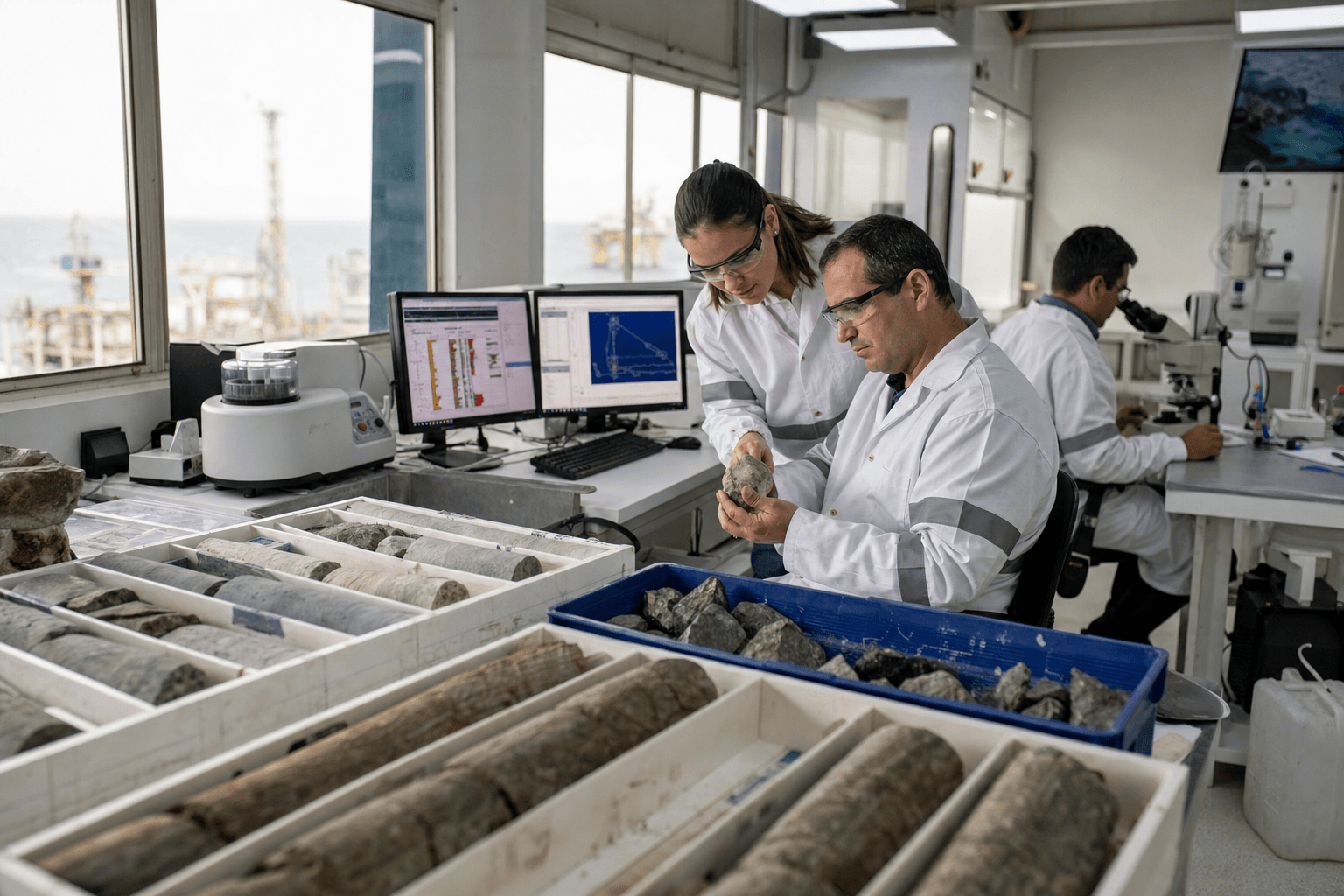
Petrobras has confirmed the presence of oil in the Morpho exploratory well off the coast of Amapá, giving Brazil’s northern offshore frontier a new boost while leaving the central investment question unanswered: how much oil is there, and can it be produced commercially?
The announcement was made on Monday in Oiapoque, in Brazil’s far north, at an event attended by President Luiz Inácio Lula da Silva and Petrobras chief executive Magda Chambriard. Petrobras is Brazil’s state-controlled oil and gas company, and its moves in frontier basins are closely watched by global energy investors because of the country’s track record in deepwater production.
“There is oil, there is a discovery. We still do not know how much,” Chambriard said.
The confirmation follows Petrobras’s earlier statement that it had detected hydrocarbons in the well through wireline logs and indications from rock samples. Those signs are important, but they do not by themselves prove that a field can be developed profitably.
A frontier well, not yet a reserve
Morpho is located in ultra-deep waters in the Foz do Amazonas basin, around 175 kilometres from the Amapá coast and about 500 kilometres from the mouth of the Amazon River. The water depth at the site is 2,886 metres, placing the project firmly in the technically demanding category where Brazil has built significant expertise over the past two decades.
Petrobras operates block FZA-M-59 with a 100% stake. The company obtained the acreage in 2013 during the eleventh bidding round held by Brazil’s National Petroleum Agency, known as the ANP. The ANP is the federal regulator responsible for oil, gas and biofuels. The block is held under a concession regime, meaning the company takes exploration risk and, if production is viable, pays the applicable government take under the concession terms.
Chambriard said Petrobras still has about 1,000 metres left to drill before reaching the bottom of the well. The company expects that phase to be finished within 15 to 20 days. After that, Petrobras will move into an appraisal stage, known in Brazil as delimitation, to evaluate the size of the reservoir and estimate recoverable volumes.
That distinction matters for investors. An oil discovery in an exploratory well can generate significant strategic value, especially in a promising basin, but it is not the same as booking reserves or approving a development project. Petrobras has not provided any estimate of volumes at Morpho and has not determined whether future production would be commercially viable.
According to Chambriard, Petrobras has spent about $3 billion since the current exploration campaign in the region began in August 2025. Operating costs are running close to $1 million per day.
Environmental licensing remains central
The Amapá campaign has been politically and environmentally sensitive. Drilling in the Foz do Amazonas basin required a long licensing process with Ibama, Brazil’s federal environmental agency. Ibama initially rejected the request in 2023 and granted the permit in October 2025.
For international companies, the case illustrates both the scale of Brazil’s offshore opportunity and the importance of regulatory execution. Environmental licensing can become a decisive factor in project timelines, particularly in new basins close to sensitive ecosystems.
Petrobras intends to drill three more wells in FZA-M-59 and another five wells in neighbouring areas. Those plans still depend on additional environmental approvals, and the company has already submitted the relevant applications.
The broader area is part of Brazil’s Equatorial Margin, a geological province that has drawn industry attention because of its similarities with offshore plays in Guyana and Suriname. Those countries have seen major discoveries in recent years, increasing interest in whether Brazil’s northern coast could hold comparable potential.
For Petrobras, the strategic logic is reserve replacement. Brazil’s pre-salt fields remain the backbone of national oil output, but large producers must continually add resources to sustain production over the long term. A successful Equatorial Margin campaign would diversify the country’s offshore portfolio and could open a new investment cycle in logistics, services, engineering and environmental monitoring.
Lula signals oil and renewables will advance together
President Lula described the find as significant for Brazil’s future oil production, but he also sought to frame the discovery within a broader energy strategy that includes renewables.
“The country will continue to be the country of biofuel innovation and will continue to be very big on the question of renewable fuel,” he said.
Lula’s message was that Brazil does not see new oil exploration and renewable energy investment as mutually exclusive. The government continues to promote biofuels and other low-carbon energy sources while supporting Petrobras’s assessment of new offshore areas.
That balance will be important for investors. Brazil is already a major oil producer, a leading biofuel market and one of the world’s cleaner large power systems because of its hydro, wind and solar generation base. The Morpho discovery, if it proves commercially meaningful, could add another layer to the country’s energy investment story.
For now, the market has confirmation of oil, not confirmation of scale. The next steps are technical, regulatory and financial. Petrobras must finish drilling, appraise the reservoir, secure any further permits and decide whether the economics justify development in one of Brazil’s most closely watched offshore frontiers.
Companies and investors looking to understand Brazil’s energy opportunities, regulatory landscape and market entry options can connect with Brazil Business Club for practical insight and local support.
Doing business in Brazil?
Brazil Business Club connects investors and companies from around the world with the people and opportunities driving Brazil's economy. Tell us what you are looking for and we will help you take the next step.
Reported by the Brazil Business Club newsroom, with reference to MercoPress.