
Petrobras finds more oil at Amazon mouth frontier
Petrobras has reported a third discovery in the Morpho well off Amapá, strengthening its case for the Equatorial Margin as Brazil’s next major offshore province. The announcement comes alongside record third-quarter production for the state-controlled oil company.
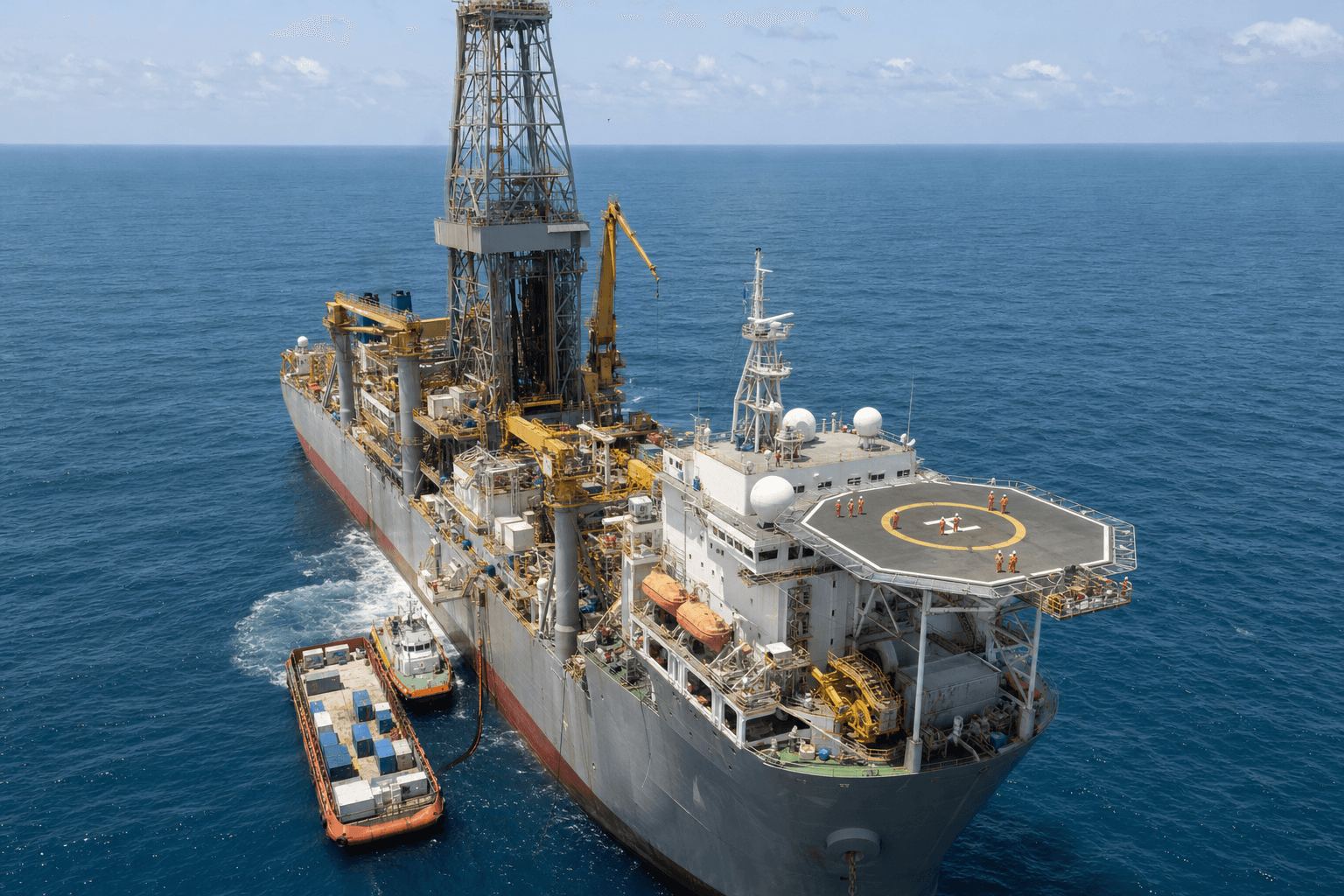
Petrobras has made a third oil discovery in the Morpho well, located in Block FZA-M-59 in ultra-deep waters off the coast of Amapá, at the mouth of the Amazon River. The well was drilled at a depth of 2,886 meters, according to the company.
The announcement, made on Thursday, October 29, adds weight to one of the most closely watched exploration campaigns in Brazil. For energy companies and investors, the result is another signal that the Equatorial Margin, a vast offshore area running along Brazil’s northern and northeastern coast, remains central to Petrobras’ reserve replacement strategy.
“Our technical persistence has enabled us to make three discoveries in the same well, making us even more optimistic about the exploratory potential of the Equatorial Margin,” Petrobras president Magda Chambriard said.
Petrobras said drilling and geological data gathering at Morpho have been completed. The operation now moves into the final stage at the well, known in the industry as abandonment, which means securing and closing the well after drilling activity ends. After that, the rig is scheduled to relocate to the Potiguar Basin, off the coast of Rio Grande do Norte, where Petrobras plans to drill the Mãe de Ouro prospect.
Why the Equatorial Margin matters
The Equatorial Margin stretches from Amapá, in Brazil’s far north, to Rio Grande do Norte in the northeast. It is considered the country’s newest deepwater and ultra-deepwater exploration frontier, a term used for offshore areas where drilling takes place in very deep sea conditions and where infrastructure is typically more complex and capital-intensive.
For international investors, the region matters because Brazil is already one of the world’s most important offshore producers, but much of its recent output growth has come from mature development of pre-salt assets in the Santos and Campos basins. New frontier areas such as the Equatorial Margin are therefore closely tied to the long-term question of how Brazil replaces reserves and sustains production into future decades.
Petrobras said its work in Block FZA-M-59 fits within its long-term plan to rebuild oil and gas reserves through exploration in new frontiers while helping supply Brazil’s energy needs. The company also said it has already drilled more than 700 wells across the Equatorial Margin.
The state-controlled producer said the region has drawn attention from Brazil’s oil and gas industry and from international markets because of the characteristics of the oil and estimated reserves. While Petrobras did not disclose commercial volumes for the Morpho discoveries in this announcement, the repeated findings in the same well will likely keep the area high on the radar of suppliers, service companies and potential partners following Brazil’s offshore pipeline.
Record production strengthens the backdrop
The exploration news arrived one day after Petrobras released operating figures for the third quarter of 2026. The company said average production of oil, natural gas liquids and natural gas reached a record 3.512 million barrels of oil equivalent per day in the period.
That was 11.7 percent higher than in the same quarter a year earlier and 5.3 percent above the second quarter of 2026. Barrels of oil equivalent, often abbreviated as boe, is a standard measure that converts oil and gas output into a single comparable unit.
Petrobras attributed the record mainly to stronger performance at large offshore systems. It cited the best production efficiency in eight years at the P-78 and P-79 floating production units in the Búzios Field, as well as peak production from the Alexandre de Gusmão floating production unit in the Mero Field. Both Búzios and Mero are major offshore assets in Brazil’s pre-salt province, where large reservoirs lie beneath thick layers of salt under the seabed.
Lower production losses from maintenance stoppages also helped the quarterly result. Petrobras added 12 new production wells during the quarter, split evenly between the Campos Basin and the Santos Basin, two of Brazil’s most important offshore oil regions.
“The excellent third-quarter operating results, released on Wednesday, are yet another example of the quality of our performance,” Chambriard said.
For companies evaluating Brazil, the combination of record output in established basins and fresh discoveries in a frontier region points to a broader investment story. The country’s offshore industry continues to demand drilling services, subsea equipment, floating production technology, logistics, environmental expertise and financing capacity.
If your company is looking to invest in Brazil, enter the Brazilian energy supply chain, or assess opportunities linked to Petrobras and the offshore sector, connect with Brazil Business Club to start the conversation.
Doing business in Brazil?
Brazil Business Club connects investors and companies from around the world with the people and opportunities driving Brazil's economy. Tell us what you are looking for and we will help you take the next step.
Reported by the Brazil Business Club newsroom, with reference to Agência Brasil.