
ICTSI challenges Maersk cargo shift at Suape as Santos rivalry deepens
The Philippine port operator says Maersk’s move to route cargo through a new private terminal in Pernambuco could trigger a contract rebalance or a compensation claim. The dispute adds another front to competition between the groups over Tecon Santos 10.
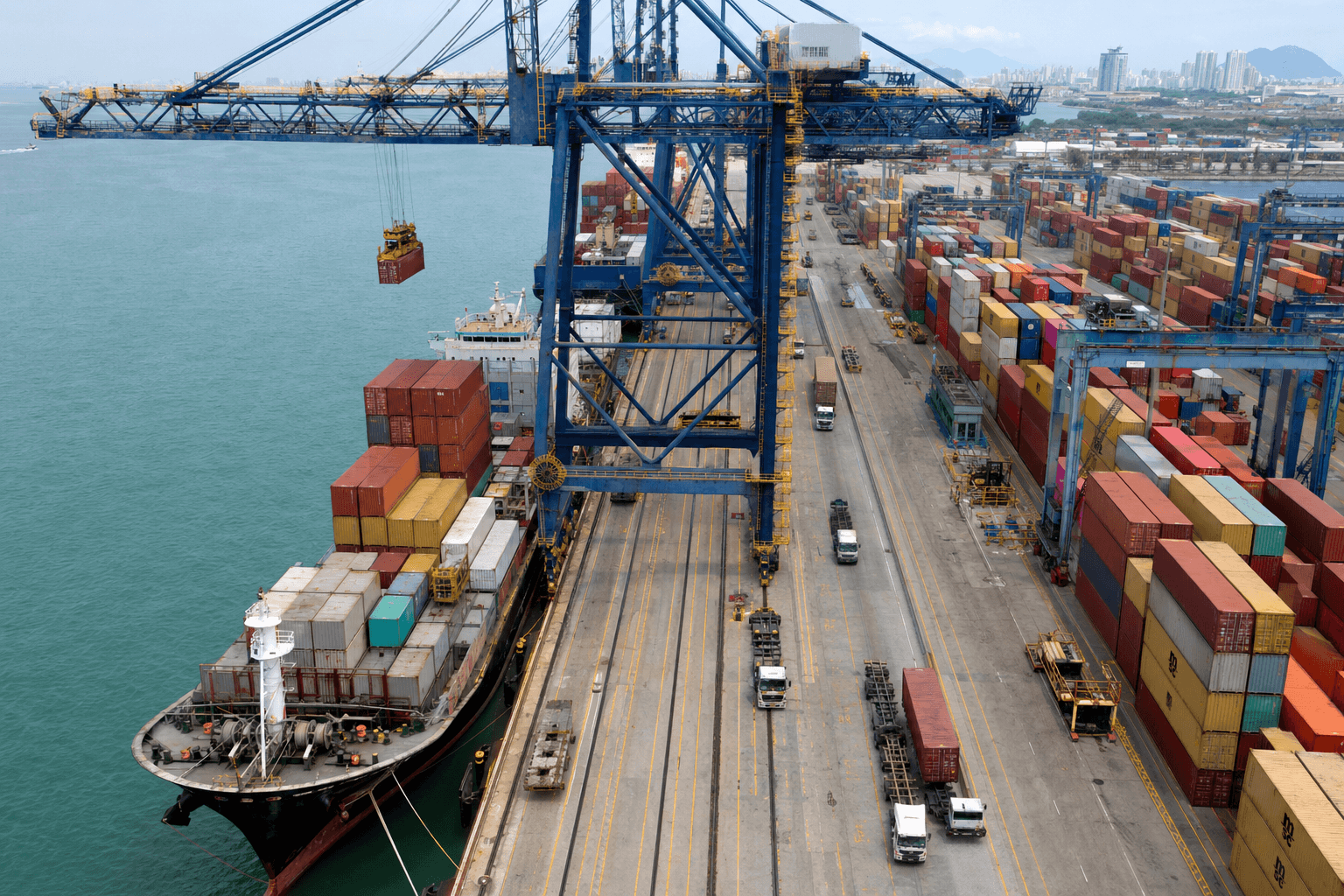
Two major global port groups are now confronting each other on two important fronts in Brazil, with a commercial dispute in Pernambuco adding pressure to an already sensitive rivalry over Tecon Santos 10 at the Port of Santos.
ICTSI, the Philippine company that operates the public container terminal at the Suape Port Complex, is seeking to reverse a decision by Maersk to remove cargo from that facility and redirect it to a new private terminal. Maersk opened the private terminal in July, according to the source report.
ICTSI argues that the cargo shift could affect the economics of its contract at Suape. The company says the change may lead to a request for an economic and financial rebalancing of the contract, or to a claim for compensation.
Why Suape matters in the dispute
Suape is one of Brazil’s key port complexes in the Northeast, located in the state of Pernambuco. For international shippers, industrial groups and logistics investors, the port is part of the infrastructure network serving a region that links consumer markets, manufacturing activity and Atlantic trade routes.
The terminal operated by ICTSI at Suape is public, meaning it sits within Brazil’s regulated port framework and is operated under a contract subject to public sector oversight. In this model, the balance between expected cargo volumes, tariffs, investment obligations and contract duration can be central to the business case.
That is why ICTSI’s reference to economic and financial rebalancing is significant. In Brazilian infrastructure contracts, this type of mechanism is used when one party argues that conditions have changed in a way that disturbs the original economics of the agreement. It is not simply a commercial complaint. It can become a regulatory and legal question, especially in sectors such as ports, roads, airports and energy.
Maersk’s move, as described in the report, is straightforward from a business standpoint. The Danish shipping and logistics group is taking cargo away from the public terminal operated by ICTSI and sending it to its own private facility, newly inaugurated in July. For ICTSI, however, the loss of those cargo flows may have consequences for the terminal’s contractual equilibrium.
A second front beyond Santos
The confrontation in Pernambuco is unfolding while ICTSI and Maersk are already on opposing sides in the dispute over Tecon Santos 10, a port terminal project at Santos. Santos, in São Paulo state, is Brazil’s most important maritime gateway and a focal point for container logistics serving the country’s largest industrial and consumer market.
The Santos angle gives the Suape disagreement broader relevance. This is not just a local fight over volumes at one terminal. It reflects how global operators are positioning themselves in Brazil’s container market, where access to strategic terminals can shape relationships with shipping lines, exporters, importers and domestic logistics providers.
For investors, the case is a reminder that port infrastructure in Brazil sits at the intersection of commercial strategy and public regulation. Private terminals can offer shipping groups more control over operations and cargo routing. Public terminals, by contrast, are tied to concession or lease arrangements designed around long term assumptions and public interest obligations.
When a large customer also owns or controls alternative infrastructure, disputes over cargo allocation can become especially sensitive. A decision that may be rational within one corporate network can have knock on effects for another operator’s regulated contract.
What investors should watch
The immediate question is whether ICTSI can persuade Maersk to change course, or whether the disagreement moves into a formal claim for compensation or contract rebalancing. The source report does not indicate that a final outcome has been reached.
For companies doing business in Brazil, the dispute highlights several practical issues. First, cargo volume assumptions matter. Second, the distinction between public and private terminal models can directly affect risk allocation. Third, competitive moves by integrated logistics groups may have regulatory consequences when they affect infrastructure contracts.
The case also underlines the importance of understanding Brazil’s port governance before committing capital or restructuring supply chains. A shift in cargo flows may look operational, but in a regulated port environment it can quickly become a contractual and political issue.
Brazil continues to attract global port operators and shipping groups because of the size of its trade flows and the long term need for logistics capacity. The ICTSI and Maersk dispute shows that the opportunity is real, but so is the need for careful structuring, local knowledge and regulatory awareness.
If your company is considering investments, partnerships or market entry in Brazil’s logistics and infrastructure sectors, connect with Brazil Business Club to understand the landscape and identify the right opportunities.
Doing business in Brazil?
Brazil Business Club connects investors and companies from around the world with the people and opportunities driving Brazil's economy. Tell us what you are looking for and we will help you take the next step.
Reported by the Brazil Business Club newsroom, with reference to Valor Econômico.