
Brazil’s domestic air travel reaches record level for January to July
Brazil handled 59 million passengers on domestic flights in the first seven months of 2026, the strongest result for the period since records began in 2000. International traffic also rose, reinforcing the recovery and expansion of the country’s aviation and tourism market.
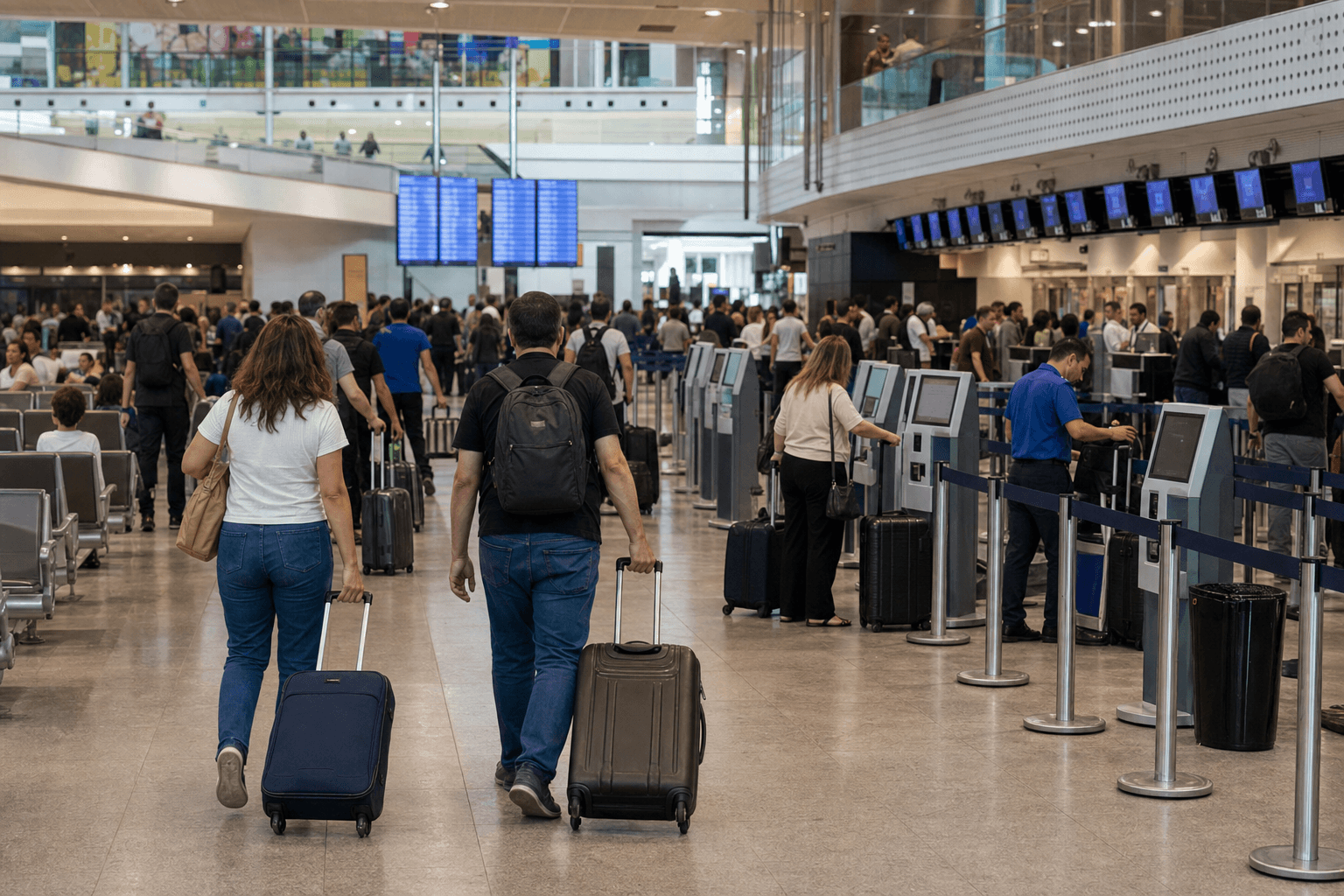
Brazil’s domestic air travel market has set a new benchmark, with 59 million passengers carried on internal flights between January and July 2026, according to data from the National Civil Aviation Agency, known as ANAC.
For international investors, the figure is more than a tourism indicator. In a country of continental scale, aviation is a core part of business mobility, regional integration and consumer spending. Stronger passenger volumes point to rising demand across airports, airlines, travel services, hospitality, ground transport and the broader visitor economy.
ANAC is Brazil’s federal civil aviation regulator, responsible for monitoring and overseeing the sector. The figures were compiled by the Ministry of Tourism, the federal body that tracks and promotes tourism activity in the country.
Domestic traffic hits a 26 year high
The 59 million domestic passengers recorded from January to July represent the highest volume for that period since ANAC’s historical series began in 2000. The result was 4.04% above the 57 million domestic travellers registered in the same seven months of 2025.
The monthly data also point to continued momentum. In July alone, Brazil’s domestic flights carried 9.1 million passengers, the strongest July result on record. That monthly total was 1.85% higher than in July 2025.
For companies operating in Brazil, the increase matters because domestic aviation links the country’s major commercial centres, including São Paulo, Rio de Janeiro, Brasília, Belo Horizonte, Porto Alegre, Recife, Salvador and other regional hubs. Air connectivity is especially important in Brazil because of the distances between markets and the uneven coverage of rail passenger transport.
The data suggest that demand for internal travel remains resilient, even as airlines, airport operators and service providers continue to manage capacity, costs and infrastructure needs. For suppliers, technology providers and investors, higher passenger flows can support opportunities in airport retail, digital travel platforms, maintenance services, baggage handling, security systems and customer experience solutions.
International routes are also expanding
The growth was not limited to domestic flights. International passenger traffic reached 17.7 million travellers in the first seven months of 2026, an increase of 8.2% compared with the same period in 2025.
July also delivered a record for international travel for that month. Brazil recorded 2.7 million international passengers in July 2026, up 4.2% from July 2025.
International traffic is a useful indicator for companies watching Brazil’s ties with global markets. A larger flow of passengers can reflect stronger inbound tourism, more outbound Brazilian travel and a deeper network of routes connecting the country with North America, Europe, Latin America and other regions.
For investors, the recovery and expansion of cross border travel may support demand in hotels, short term rentals, airport concessions, corporate travel management, payment services, insurance, events and destination marketing. It can also strengthen the case for new routes or added frequencies, particularly where business travel overlaps with leisure demand.
What it means for Brazil’s business environment
Brazil’s air transport data arrive as tourism and aviation continue to play a visible role in the country’s services economy. The Ministry of Tourism’s compilation of ANAC figures gives policymakers and the private sector a clearer view of where passenger demand is moving, both inside the country and across international borders.
The record January to July result for domestic flights shows that Brazil’s internal travel market has surpassed pre existing milestones in the official series. The international figures, with faster growth than domestic traffic over the same period, add a second signal of market depth.
That combination is relevant for foreign companies assessing Brazil as a place to sell, invest or expand operations. Aviation demand can influence site selection, logistics planning, executive mobility and access to regional consumer markets. It also shapes the outlook for adjacent sectors that depend on predictable movement of people.
The latest numbers do not, on their own, answer questions about airline profitability, fares or airport capacity. But they do show that passenger demand is growing from an already large base. In Brazil, where air travel is often the practical option for long distance movement, that is a significant marker for the economy.
For companies looking to understand Brazil’s aviation, tourism and services opportunities, Brazil Business Club can help connect market insight with practical business relationships. If you are planning to invest in or do business with Brazil, get in touch with Brazil Business Club.
Doing business in Brazil?
Brazil Business Club connects investors and companies from around the world with the people and opportunities driving Brazil's economy. Tell us what you are looking for and we will help you take the next step.
Reported by the Brazil Business Club newsroom, with reference to Agência Brasil.