
Brazil’s 2027 Budget Plan Targets R$18.6 Billion Primary Surplus
The federal government’s draft budget points to a modest effective primary surplus in 2027, alongside R$7.45 trillion in total spending and nearly R$100 billion for public credit programmes. The proposal now goes to Congress, where investors will watch how fiscal targets, mandatory spending and subsidised credit are treated.
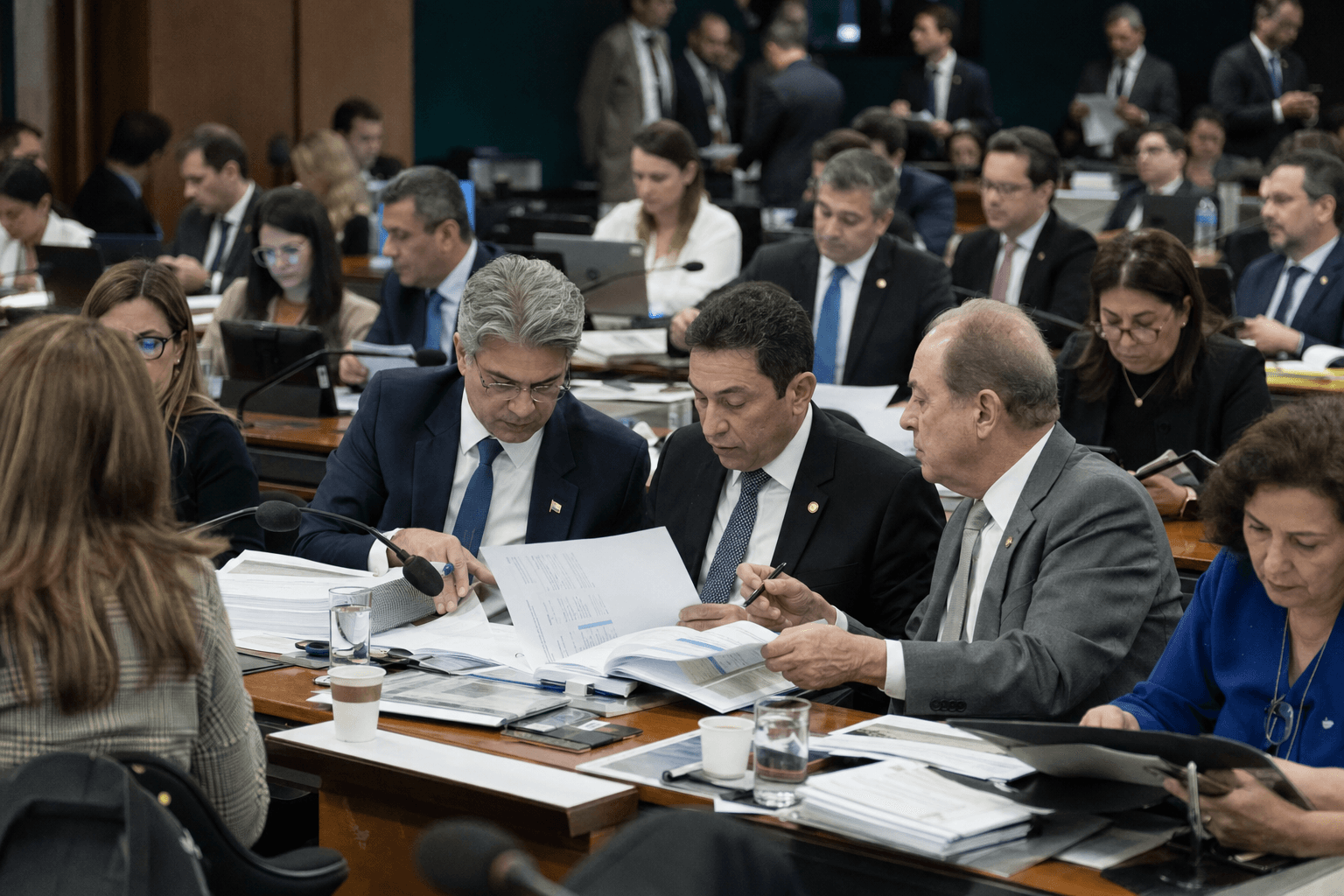
Brazil’s federal government has presented a 2027 budget proposal that projects an effective primary surplus of R$18.6 billion, setting out the fiscal assumptions that will frame policy debate in Brasília over the coming months.
The draft budget, known in Brazil as the Projeto de Lei Orçamentária Anual, or PLOA, estimates total federal budget volume at R$7.45 trillion for 2027. Of that amount, R$3.42 trillion is classified as primary expenditure, which covers government spending before interest payments, while R$3.82 trillion relates to financial expenses.
For international companies and investors, the document is an important signal of how President Luiz Inácio Lula da Silva’s administration intends to balance social spending, public investment, subsidised credit and fiscal consolidation under Brazil’s current fiscal framework.
Budget proposal heads to Congress
The PLOA is the annual bill sent by the executive branch to Congress setting out expected federal revenue and planned expenditure for the following year. Under Brazilian rules, it must be submitted by 31 August. Once lawmakers review, amend and approve it, the proposal becomes the Lei Orçamentária Anual, or LOA, the binding annual budget law.
The government fixed the 2027 ceiling for primary expenses at R$2.5765 trillion, an increase of R$183.8 billion from the 2026 limit. This cap is one of the figures investors will watch closely, since Brazil’s fiscal framework links spending growth to revenue performance and sets targets for the primary result.
The headline primary surplus in the draft is an “effective” surplus of R$18.6 billion, a figure that takes into account deductions permitted under current legislation. The fiscal target before those deductions is 0.5% of gross domestic product, equivalent to around R$73.2 billion.
The distinction matters. Brazil’s primary balance excludes interest payments on public debt and is a key measure used by markets to assess whether the government is generating enough revenue to stabilise debt dynamics over time. The effective figure is lower because the law allows certain items to be discounted when assessing compliance.
Growth assumptions and spending priorities
The budget’s macroeconomic assumptions include real GDP growth of 2.56% in 2027 and nominal GDP of R$14.78 trillion. These estimates feed directly into revenue forecasts and, by extension, the government’s room for spending.
Among the largest allocations, the draft sets aside R$272.2 billion for health, R$141.2 billion for education and R$133.8 billion for investments. It also includes a projected minimum wage of R$1,741 for 2027. In Brazil, the minimum wage has broad fiscal implications because it affects social security benefits and other federal obligations.
One point highlighted in the proposal is the expected decline in the share of mandatory expenses within total primary spending, from 92.4% in 2026 to 91.7% in 2027. Mandatory expenses include items such as pensions, payroll and constitutionally required transfers. They are politically and legally difficult to reduce, leaving limited room for discretionary spending, including investment.
In remarks ahead of the budget presentation, Minister Moretti said the 2027 proposal envisages growth below the fiscal framework limit for mandatory spending, congressional budget amendments and some legally earmarked expenditures. He argued that slowing mandatory expense growth, combined with closer scrutiny of subsidised policies, should help the government meet its fiscal goal. He also cautioned that the measures in the budget do not necessarily solve all of Brazil’s longer term fiscal challenges.
Subsidised credit comes under closer review
A notable feature of the 2027 proposal is the allocation of R$97.9 billion to credit programmes through six public funds. These include Minha Casa, Minha Vida, Brazil’s flagship low income housing programme, as well as export guarantee initiatives and technology development financing.
For the first time, the government plans to spell out the fiscal cost of these loans in subsidy terms and compare that cost with the expected return of each policy. The calculation will consider the difference between the remuneration rate on the funds used in the programmes and the projected average cost of issuing federal public debt. That difference will then be applied to the evolution of the outstanding loan balance.
This is relevant for banks, exporters, infrastructure players and technology companies because subsidised credit remains an important channel of Brazilian public policy. Greater transparency could help investors assess which programmes are likely to be expanded, redesigned or challenged during the congressional budget process.
The proposal now moves into the political phase. Congress can alter allocations, negotiate amendments and shape the final budget law. For companies planning capital expenditure, financing strategies or public sector partnerships in Brazil, the debate will offer clues on interest sensitive sectors, infrastructure spending, public credit priorities and the government’s fiscal discipline.
Brazil Business Club helps international companies and investors understand the policy, regulatory and market context behind decisions like the 2027 budget. If you are looking to invest in or do business with Brazil, connect with Brazil Business Club.
Doing business in Brazil?
Brazil Business Club connects investors and companies from around the world with the people and opportunities driving Brazil's economy. Tell us what you are looking for and we will help you take the next step.
Reported by the Brazil Business Club newsroom, with reference to Exame.