
Brazil Regulator Advances 24 Onshore Oil Blocks in Potiguar Basin
ANP has approved the nomination of 24 exploratory blocks in the onshore Potiguar Basin for possible inclusion in future concession rounds. The areas still face environmental review, ministerial clearance and a public hearing before they can be offered.
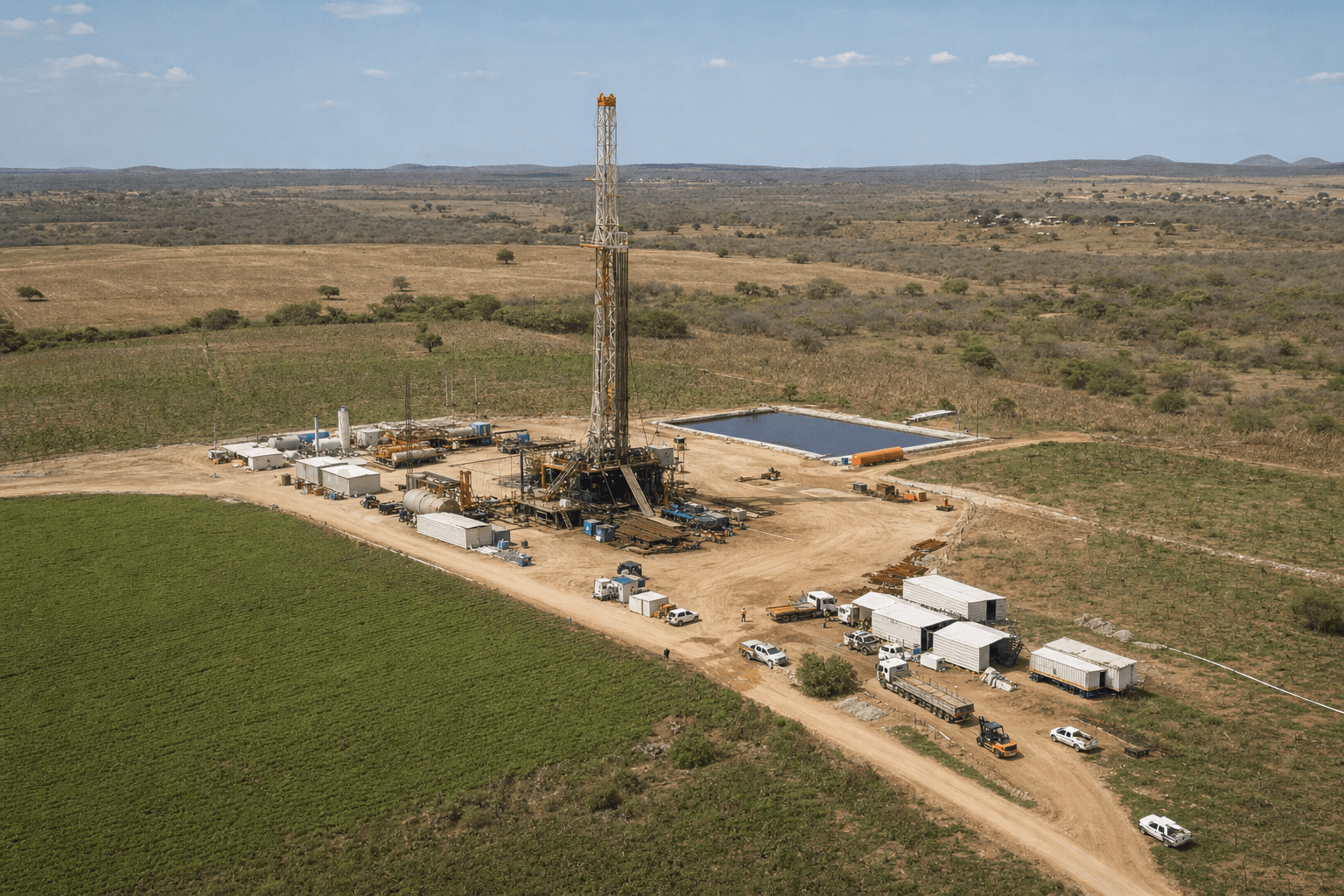
Brazil’s oil and gas regulator has taken an early step toward adding new onshore exploration acreage to the country’s concession pipeline, approving the nomination of 24 exploratory blocks in the Potiguar Basin.
The board of the National Agency of Petroleum, Natural Gas and Biofuels, known as ANP, approved the areas on Friday, 4 September. The blocks are located in the onshore portion of the Potiguar Basin, a producing region in Brazil’s Northeast that spans parts of Rio Grande do Norte and Ceará.
For international energy companies, the decision does not mean the blocks are immediately available. ANP said the nominated areas can only be offered after the sixth cycle of the Permanent Concession Offer, scheduled for 7 October. They must also clear a set of regulatory and environmental steps before any auction process can move forward.
How Brazil’s permanent concession model works
The blocks may be included in future cycles of the Oferta Permanente de Concessão, or Permanent Concession Offer. This is Brazil’s standing system for offering oil and gas acreage under concession contracts, rather than relying solely on occasional, stand-alone bid rounds.
Under the concession model, companies compete for the right to explore and, if successful, produce oil or gas in a defined area. The framework is overseen by ANP, the federal agency responsible for regulating Brazil’s oil, natural gas and biofuels sectors.
The latest approval adds potential new supply to that system, but it remains a preparatory move. ANP’s board has approved the indication of the blocks, not their immediate auction. Before investors can assess final bidding terms, the areas must complete additional review.
That distinction matters for companies tracking entry points into Brazil’s upstream market. The announcement signals regulatory interest in bringing more onshore acreage to market, while leaving timing and final availability dependent on the next procedural stages.
Ceará discovery draws attention to POT-T-551
One of the nominated areas is block POT-T-551, which covers the region around Tabuleiro do Norte, a municipality in Ceará. The area has attracted attention after a recent incident in which a farmer drilling land in search of water encountered a dark liquid.
According to the source report, the substance was later confirmed as petroleum by the ANP’s Center for Technological Research and Analysis, known as CPT/ANP. The center is part of the regulator’s technical structure and conducts analysis relevant to Brazil’s oil and gas oversight.
The episode does not by itself define the commercial potential of the block. Exploration interest depends on a broader set of geological, technical, regulatory and economic factors. Still, the confirmation that the fluid was oil gives POT-T-551 a particular visibility among the 24 nominated areas.
For operators and service companies focused on mature or onshore basins, the Potiguar Basin is a familiar name in Brazil’s energy map. The new nominations suggest continued room for smaller scale and regionally focused upstream activity, provided the areas pass the required approvals and later attract bids.
What must happen before bidding
The next steps are not merely administrative. ANP said the approved blocks will still need to go through environmental analysis and obtain a joint statement from two federal ministries: the Ministry of Mines and Energy, known as MME, and the Ministry of the Environment and Climate Change, known as MMA.
That joint manifestation is a Brazil-specific step in which the energy and environmental authorities assess whether an area can proceed toward an offer. A public hearing must also be held before the blocks can be made available.
These stages are important for foreign investors to monitor because they shape both the timeline and the risk profile of future acreage. Environmental scrutiny, ministerial alignment and public consultation can influence which blocks ultimately reach the market and under what conditions.
The sixth cycle of the Permanent Concession Offer remains the near-term milestone, with ANP indicating that the newly nominated Potiguar Basin blocks can only be offered after that 7 October event. Companies interested in the Northeast onshore market will therefore be watching not only ANP’s auction calendar, but also the regulatory paperwork that follows this approval.
Brazil continues to use its permanent offer system to keep exploration opportunities in circulation. For investors, the lesson is straightforward: early regulatory approvals can be valuable signals, but the investable opportunity emerges only once the legal, environmental and consultation requirements are complete.
If your company is evaluating energy investments, partnerships or market entry in Brazil, connect with Brazil Business Club to understand the regulatory landscape and identify the right local opportunities.
Doing business in Brazil?
Brazil Business Club connects investors and companies from around the world with the people and opportunities driving Brazil's economy. Tell us what you are looking for and we will help you take the next step.
Reported by the Brazil Business Club newsroom, with reference to InfoMoney.