
Brazil Opens Transmission Auctions to Battery Storage
Aneel plans to include a battery project in Brazil's first 2027 transmission auction, creating a new route for storage investment in the power grid. The pilot project in Acre is estimated at R$249 million and could replace local thermal generation.
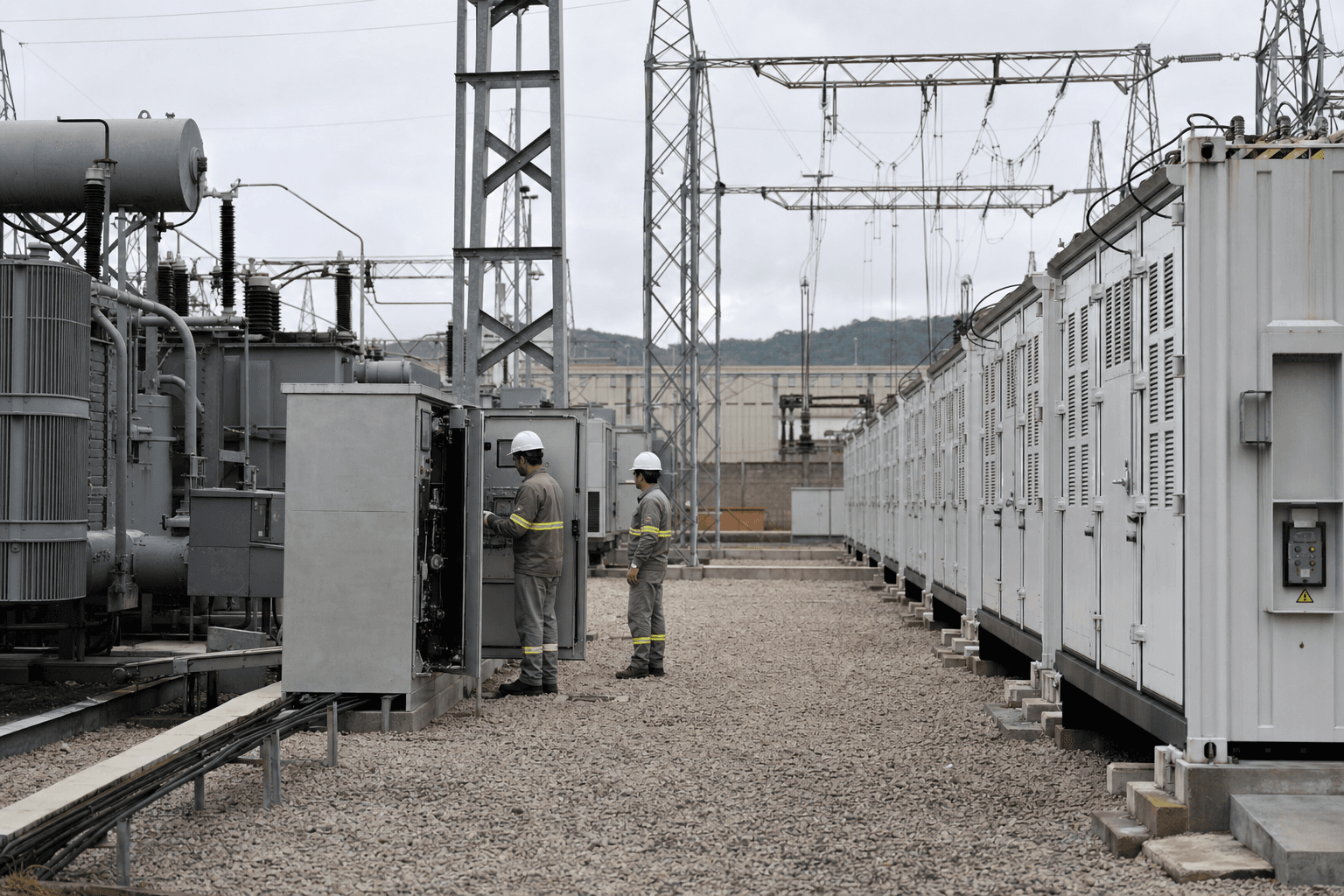
Brazil's electricity regulator is preparing to bring battery storage into the country's transmission auction framework, a move that could give investors a clearer path into one of the power sector's most closely watched technologies.
Aneel, the National Electric Energy Agency that regulates Brazil's power market, approved on Tuesday a proposal for public consultation that includes a battery project in the first transmission auction scheduled for 2027. The auction is expected to take place on April 30.
The initiative marks a potential shift in how storage is contracted in Brazil. Until now, federal authorities have mostly examined batteries as a way to add firm capacity to the electricity system, an attribute traditionally supplied by hydropower and thermal plants. Under the new proposal, batteries would also be treated as transmission assets, used to support the grid and reduce the risk of supply interruptions in specific locations.
A pilot project in Acre
Aneel's first planned battery project under the transmission model is located in Acre, at the Cruzeiro do Sul substation. The regulator said the system would make it possible to retire thermal plants that currently serve the area, while improving the reliability of electricity supply.
The estimated investment is R$249 million. The proposed contract would run for 18 years, including three years for implementation and 15 years of operation, a structure designed around the expected useful life of the equipment.
For international companies active in storage, grid equipment, engineering, construction, and operations, the Acre project is significant beyond its size. It would test whether Brazil can fold batteries into the regulated transmission business, where revenues are generally tied to availability and paid through electricity tariffs.
That differs from Brazil's emerging capacity reserve model, where the government seeks to procure dependable power resources to ensure system adequacy. Batteries are also being considered for a capacity auction planned for December, but that route has generated tension in the sector.
Why the transmission model matters
The dispute around the December capacity auction centres on who pays. Under Brazilian law, when batteries are contracted as capacity, their cost must be borne by power generators. Aneel has not yet regulated that mechanism, and the uncertainty has angered parts of the generation segment, with threats of legal challenges to the first tender.
By contrast, if batteries are contracted as transmission assets, the payment framework is already more familiar to the market. During Tuesday's meeting, Aneel's director general said the agency was moving ahead with the first auction for a battery solution in transmission without the same debate over charges.
“We are holding the first tender for the battery solution in transmission, without any discussion over how the charge is paid, because it is a tariff, half paid by consumers and half by the generation segment,” he said.
For investors, that distinction is important. Brazil's transmission auctions have attracted major domestic and foreign infrastructure groups because they offer long-term regulated revenue, although projects still carry construction, licensing, financing, and equipment risks. Including storage in that framework could broaden the pool of bankable grid assets, provided the final rules are clear.
The public consultation will be closely watched for details on technical requirements, performance obligations, remuneration, penalties, and how the regulator will account for battery degradation over the contract period.
A R$12.9 billion auction pipeline
The Acre battery project is only one piece of the first 2027 transmission auction. Aneel's current proposal includes 11 other projects across several states, with 3,245 kilometres of new transmission lines and substations offering 1,386 MVA of transformation capacity. MVA, or megavolt amperes, is a standard measure of substation power capacity.
Total planned investment for the auction is R$12.9 billion.
Among the larger projects under consideration are the Brazil-Bolivia interconnection, with grid reinforcements in Mato Grosso do Sul, and new transmission facilities intended to serve electricity-intensive loads in Brazil's Northeast, including data centres. Aneel said those projects account for more than half of the planned investment, but they may still be removed from the auction because unresolved issues remain.
The reference to data centres is noteworthy. Brazil is seeing growing demand from digital infrastructure operators, and power availability is becoming a decisive factor in site selection. Transmission expansion, grid reliability, and the possible integration of storage could therefore shape investment decisions well beyond the electricity industry.
For companies assessing Brazil's energy transition, the message is clear. Storage is moving from policy discussion toward regulated procurement, and the first projects will help define commercial models for years to come.
If your company is looking to invest in Brazil's energy sector, supply technology, finance infrastructure, or understand upcoming regulatory opportunities, connect with Brazil Business Club to explore the market with local insight and practical support.
Doing business in Brazil?
Brazil Business Club connects investors and companies from around the world with the people and opportunities driving Brazil's economy. Tell us what you are looking for and we will help you take the next step.
Reported by the Brazil Business Club newsroom, with reference to InfoMoney.