
Brazil inflation preview jumps to 0.70 percent as electricity discount fades
Brazil’s IPCA-15 inflation gauge rose 0.70 percent in September, reversing August’s deflation as household electricity bills normalised after a temporary Itaipu credit. The 12 month reading moved to 4.47 percent, close to the top of the official target band.
Brazil’s advance inflation indicator returned to positive territory in September, giving companies and investors another signal that regulated prices can still move the headline number sharply even when the broader price picture is mixed.
The IPCA-15, Brazil’s preliminary consumer inflation index, rose 0.70 percent in September, according to data released on Friday, September 25, by IBGE, the national statistics institute. It was the strongest monthly reading since April, when the index climbed 0.89 percent, and followed a 0.40 percent decline in August.
Over 12 months, the IPCA-15 reached 4.47 percent, up from 4.24 percent in August. For 2026 to date, the indicator is running at 3.82 percent. In September 2025, the same preliminary measure had stood at 0.48 percent.
For international businesses operating in Brazil, the September number is less a sign of a sudden demand shock than a reminder that electricity tariffs, transport costs and food prices can quickly affect operating expenses, household purchasing power and expectations for official inflation.
Electricity bills drive the September rebound
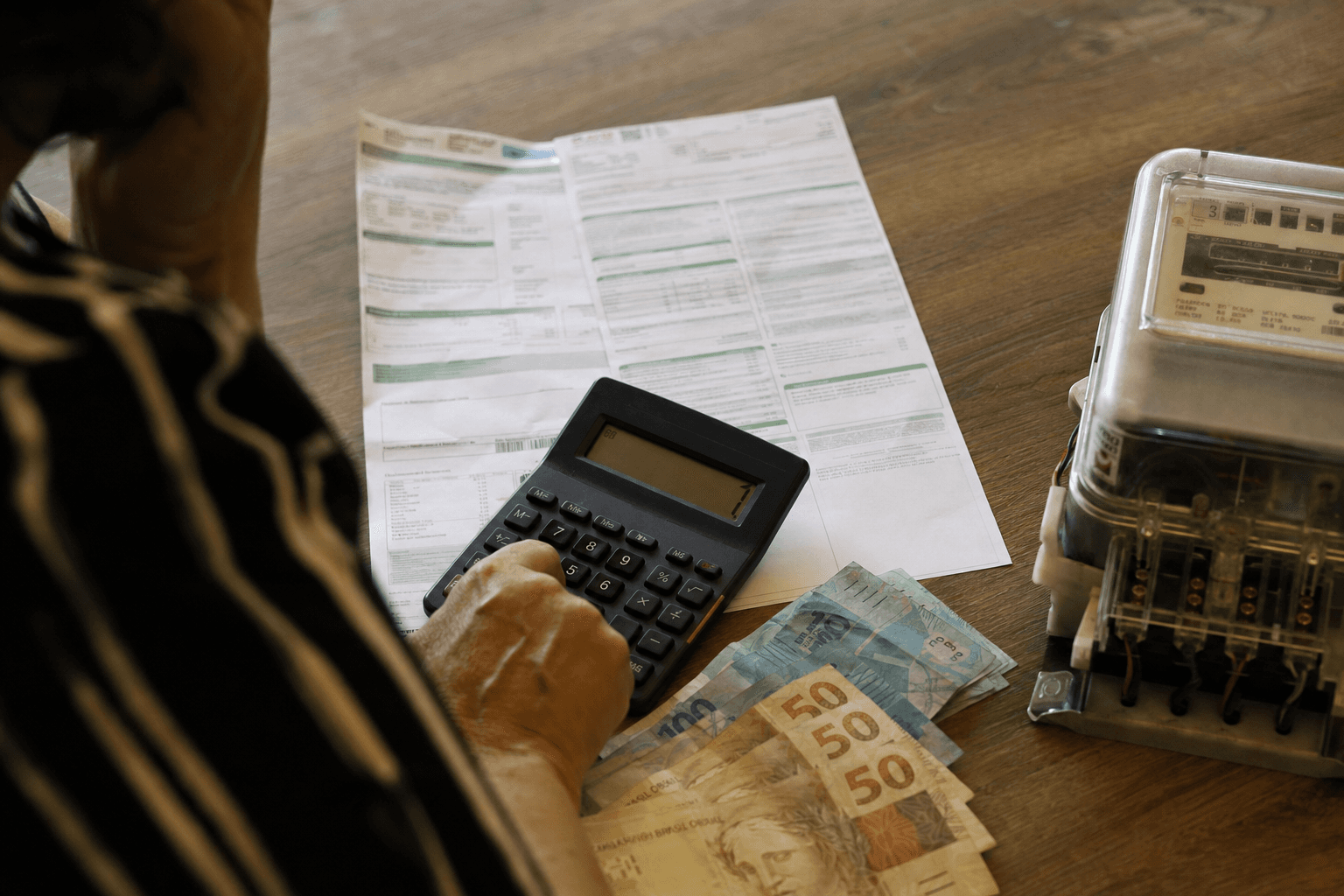
The biggest factor behind the monthly increase was housing, which rose 2.07 percent and contributed 0.31 percentage points to the headline IPCA-15. Within that group, residential electricity climbed 7.42 percent, the single largest individual impact on the index at 0.29 percentage points.
That jump was largely mechanical. In August, electricity bills had fallen 6.25 percent because consumers received the Itaipu Bonus, a credit linked to the positive balance of the sales account of Itaipu, the state owned hydroelectric plant on the Brazil Paraguay border. With that discount no longer present in September, regular electricity bills were compared against a temporarily reduced base from the previous month.
IBGE and market analysts had already expected this effect, but it still pushed the advance inflation reading above the 0.52 percent September projection in the Central Bank’s Focus Bulletin, a weekly survey of financial institutions published on Monday, September 21.
The month by month pattern in 2026 shows how uneven price dynamics have been. The IPCA-15 rose 0.20 percent in January, 0.84 percent in February, 0.44 percent in March, 0.89 percent in April, 0.62 percent in May, 0.41 percent in June and just 0.06 percent in July, before dropping 0.40 percent in August and rebounding 0.70 percent in September.
Transport and food add selective pressure
All nine major groups surveyed by IBGE were either positive or close to stable in September. After housing, transport was one of the main contributors, rising 0.60 percent and adding 0.12 percentage points to the overall result. Airfares were a notable source of pressure, increasing 9.82 percent.
Fuel prices were relatively contained overall, up 0.22 percent. Automotive gas increased 1.56 percent and gasoline rose 0.30 percent, while diesel fell 0.78 percent and ethanol declined 0.22 percent.
Food and beverages rose 0.40 percent, adding 0.09 percentage points to the IPCA-15. Food consumed at home increased 0.38 percent in September, after falling 0.97 percent in August. Among household food items, tomatoes were the standout, up 20.76 percent. Rice rose 2.39 percent and meat increased 1.30 percent.
There were also meaningful price declines in supermarket baskets. Carioca beans fell 6.33 percent, onions dropped 4.41 percent and ground coffee declined 1.36 percent.
Other groups had more modest effects. Personal expenses increased 0.96 percent, household goods rose 0.55 percent, communication advanced 0.54 percent, clothing was up 0.41 percent, health and personal care rose 0.13 percent and education edged up 0.03 percent.
Why IPCA-15 matters for business planning
The IPCA-15 is often treated as Brazil’s inflation preview because it uses essentially the same methodology as the full IPCA, the country’s official inflation index. The IPCA is the benchmark used in Brazil’s inflation targeting system, which currently aims for 3 percent year-over-year inflation, with a tolerance range of 1.5 percentage points above or below that target.
The advance index differs mainly in timing and geographic coverage. The September IPCA-15 collected prices from August 15 to September 15, before the month had ended. It tracks a basket of goods and services consumed by households earning from one to 40 minimum wages. Brazil’s minimum wage is currently BRL 1,621.
IBGE monitors 367 products and services for the IPCA-15, 10 fewer than in the full IPCA. The preliminary index covers 11 locations: the metropolitan areas of Rio de Janeiro, Porto Alegre, Belo Horizonte, Recife, São Paulo, Belém, Fortaleza, Salvador and Curitiba, plus Brasília and Goiânia. The full IPCA covers 16 locations, including Vitória, Campo Grande, Rio Branco, São Luís and Aracaju.
For foreign investors, the key takeaway is that Brazil’s inflation picture remains sensitive to administered prices and temporary policy effects, especially in utilities. Companies should watch how the September electricity rebound feeds into pricing decisions, wage negotiations and expectations for monetary policy.
If your company is assessing investment, expansion or partnerships in Brazil, connect with Brazil Business Club for practical insight into the market, regulatory context and business opportunities.
Doing business in Brazil?
Brazil Business Club connects investors and companies from around the world with the people and opportunities driving Brazil's economy. Tell us what you are looking for and we will help you take the next step.
Reported by the Brazil Business Club newsroom, with reference to Agência Brasil.