
Brazil industrial output fall raises pressure on third quarter GDP
Industrial production fell 0.6% in August, missing market expectations and strengthening concerns that Brazil’s economy may have contracted in the third quarter. Weak capital goods output points to delayed investment as high interest rates and credit stress weigh on companies.
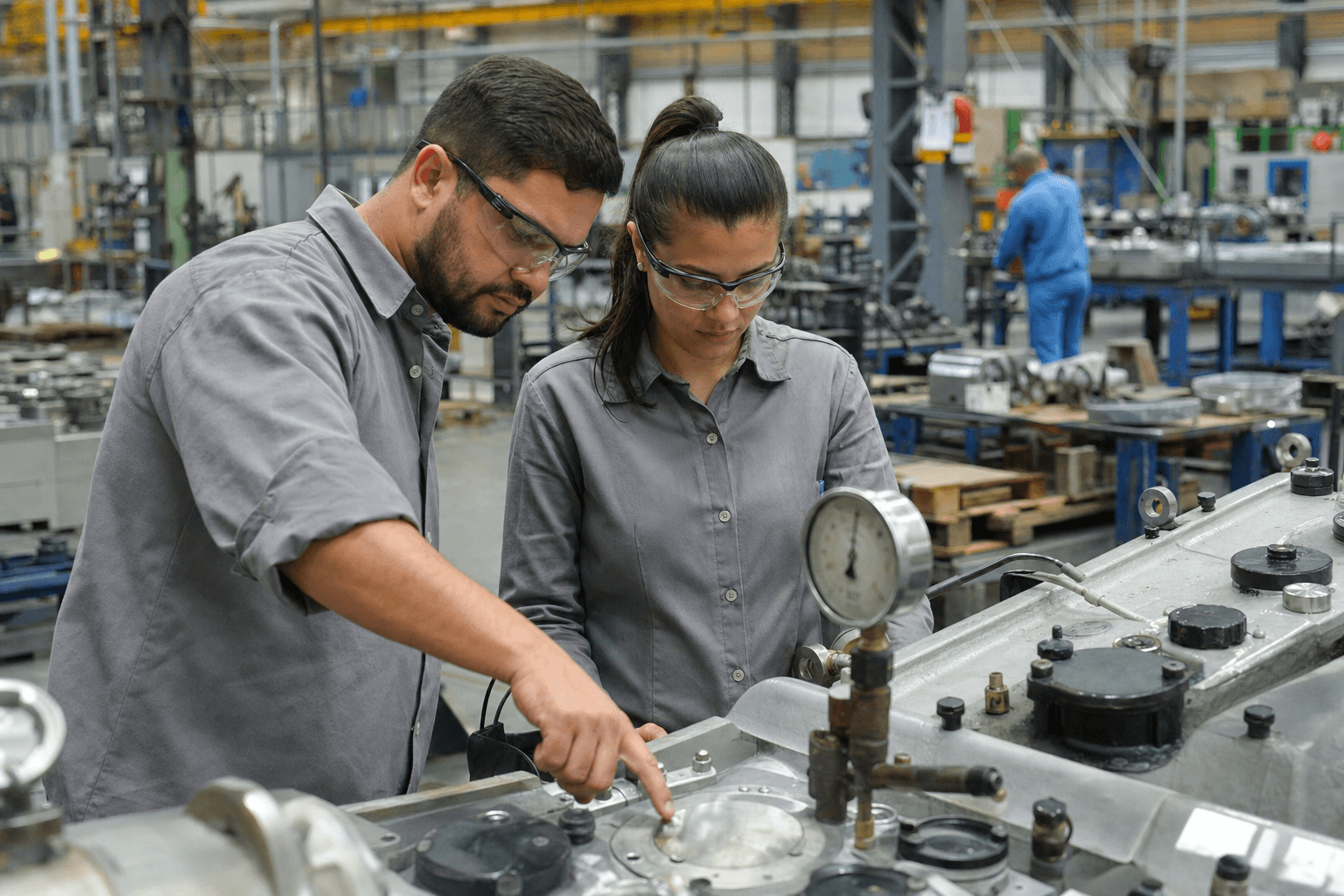
Brazil’s industrial sector lost momentum in August, adding to concerns that Latin America’s largest economy may have delivered a negative GDP reading in the third quarter.
Industrial production fell 0.6% from July, according to data from IBGE, Brazil’s national statistics agency. The result was weaker than the market had expected. Economists surveyed by the source material had anticipated a 0.1% increase, making the August release a clear disappointment for analysts tracking activity.
The decline was not concentrated in a narrow pocket of the economy. IBGE’s Monthly Industrial Survey, known locally as PIM, showed that 16 of the 25 industrial activities covered by the survey contracted in the month. All four broad economic categories also declined on a seasonally adjusted basis.
Manufacturing and extractive industries each fell 0.7% from July. Compared with August 2025, overall industrial production was down 1.2%.
For international investors, the August numbers matter because industry is a key signal for business confidence, credit appetite and future productivity in Brazil. The report suggests that the combination of high borrowing costs, rising delinquency among households and companies, and softer demand is beginning to restrain both consumption and investment decisions.
GDP tracking turns more cautious
The weaker industrial print has already affected short term GDP estimates.
Rodolfo Margato, economist at XP Investimentos, said August production was below market expectations and aligned with the slowdown already included in XP’s base case. “Industrial production data in August are consistent with the weakening of activity incorporated in our baseline scenario,” he said.
XP revised its third quarter GDP tracking estimate from stagnation, at 0.0%, to a 0.1% contraction compared with the second quarter.
Itaú’s economic team also noted that the result reduced the statistical carryover for the third quarter. In practical terms, carryover measures how much past monthly data already imply for the following quarterly result. A weaker carryover makes it harder for the quarter as a whole to show growth unless later data improve materially.
According to Itaú, the August number increases the likelihood of a quarterly fall in industrial output and reinforces downside risks to its GDP tracking estimate.
At ASA, economist Leonardo Costa maintained a projection of 0.2% GDP growth for the quarter, but warned that “the balance of risks is pointing downward” as economic activity loses traction.
Antônio Ricciardi, economist at Banco Daycoval, said the data confirm that the economy is likely to keep slowing through the third and fourth quarters, after the partial effect of government stimulus seen earlier in the year faded.
Capital goods point to weaker investment
The most sensitive part of the report for companies planning operations in Brazil may be capital goods, a category that includes machinery and equipment used to expand productive capacity.
Capital goods output fell 0.6% in August and dropped 4.1% compared with the same month last year. That marked the fifth consecutive year on year decline for the category.
André Matos, CEO of MA7 Capital, said the headline monthly decline was negative, but the capital goods data were more worrying. “The monthly fall is bad, but what really concerns us is capital goods, which are the thermometer of productive investment,” he said. “A machine that is not manufactured now is productivity that will not exist three years from now.”
The figures suggest companies are delaying purchases, reducing orders and avoiding new capacity commitments in an environment where Brazil’s real interest rates remain high. The Selic, the benchmark rate set by the Central Bank of Brazil, is still restrictive even after recent cuts, keeping corporate credit expensive.
Breno Grou, CEO of Sinter Futura, said the first signs of caution appear in the order book, with smaller batches, more frequent restocking and more careful customers.
Valdir Piran Jr., CEO of Grupo Intra, estimated that if current conditions persist into 2027, between R$15 billion and R$25 billion in industrial investment could be postponed. He said the impact would be significant because it would delay capacity expansion, plant modernisation and productivity gains, making any production recovery slower.
Other industrial categories also weakened in August. Consumer goods fell 1.5% in the month, with durable goods down 1.0% and semi durable and non durable goods down 1.7%. Intermediate goods, which are inputs used by other industries, slipped 0.2%.
Rate cuts may not come faster
A softer industrial sector can reduce companies’ ability to pass prices on to customers, but economists do not see the data as enough to change the Central Bank’s inflation concerns by itself.
Cassio Viana de Jesus, chief investment officer at Pilar Capital, noted that Brazil’s labour market remains firm, helping to sustain household consumption and limiting the speed at which monetary policy can be loosened.
Matos, of MA7 Capital, put the issue bluntly: “Weak industrial demand does not solve services inflation, and that is why this data alone does not create room for the Central Bank to accelerate.”
Claudia Moreno, economist at C6 Bank, said that despite recent cuts, the Selic remains at a high level and should stay elevated for some time.
External risks also remain relevant. Fábio Murad, of Wiser Asset, warned that high global interest rates or greater risk aversion could weaken the Brazilian real. A weaker currency would make imported inputs and machinery more expensive, offsetting part of the disinflationary effect from weaker domestic demand.
For companies and investors, the message is nuanced. Brazil’s industrial slowdown points to caution in the short run, especially for capital intensive sectors. But it also highlights where pent up demand may emerge once financing conditions improve, particularly in machinery, equipment, plant upgrades and productivity related investments.
Brazil Business Club helps international companies understand the data, identify local partners and navigate investment opportunities in Brazil. If your business is considering entering or expanding in the Brazilian market, connect with Brazil Business Club.
Doing business in Brazil?
Brazil Business Club connects investors and companies from around the world with the people and opportunities driving Brazil's economy. Tell us what you are looking for and we will help you take the next step.
Reported by the Brazil Business Club newsroom, with reference to InfoMoney.