
Brazil GDP rises 0.5% in second quarter as agriculture carries the expansion
Brazil’s economy grew in line with market forecasts in the second quarter of 2026, helped by a strong agricultural performance. Investment advanced, but household consumption weakened under the pressure of high interest rates.
Brazil’s economy expanded by 0.5% in the second quarter of 2026 compared with the previous three months, official data showed on Tuesday, September 1, confirming a slower but still positive pace of activity after a strong start to the year.
The figures were released by IBGE, Brazil’s national statistics agency, through its quarterly national accounts system. For international investors, IBGE is the main official source for GDP, inflation, labour market and demographic data in Latin America’s largest economy.
The result matched the broad expectations of financial markets, which had projected growth between 0.4% and 0.5% for the period.
In nominal terms, Brazilian GDP reached R$3.4 trillion in the second quarter. Of that amount, R$2.9 trillion came from value added at basic prices, while R$487.9 billion reflected taxes on products net of subsidies.
Compared with the second quarter of 2025, the economy grew 2.0%. GDP rose 1.9% in the first half of 2026 from the same period a year earlier, and also advanced 1.9% over the four quarters through June.
Agriculture offsets a softer domestic economy
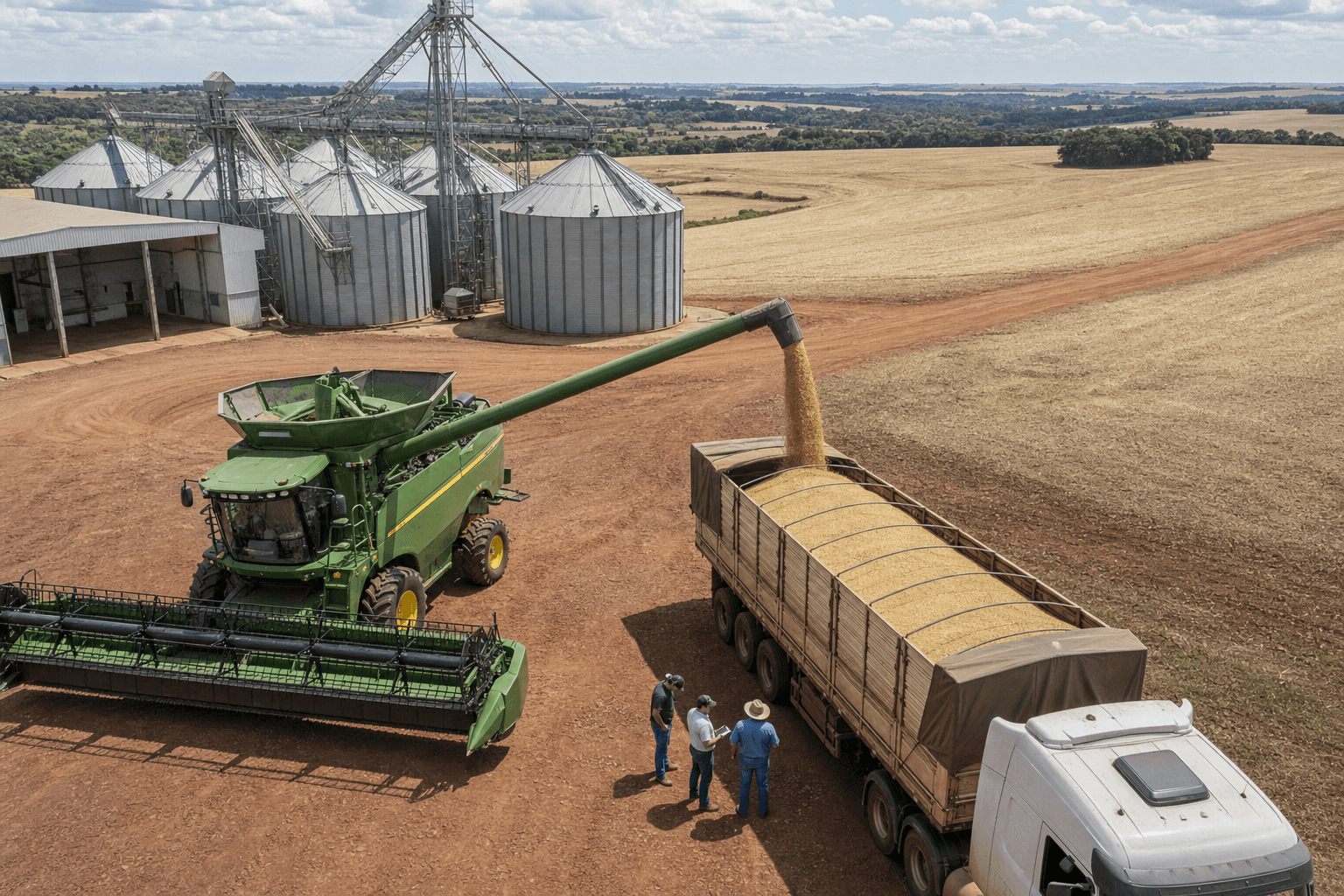
The main driver of growth came from agriculture and livestock, which expanded 2.8% from the first quarter. The sector benefited from solid livestock activity and from soybean and coffee crops, which helped offset weaker results for rice, cotton and corn.
The performance matters beyond the headline GDP number. Agribusiness remains one of Brazil’s most globally integrated sectors, with direct implications for logistics, ports, storage, commodities trading, machinery, fertilisers, crop technology and rural credit. A stronger agricultural quarter can lift demand across several linked industries, even when other parts of the economy are cooling.
Services, the largest segment of Brazil’s economy, grew only 0.2% in the quarter. Within services, information and communication rose 2.1%, while transport, storage and postal services advanced 1.1%. Commerce and other service activities were stable. Public administration fell 0.4%, and financial activities declined 0.3%.
Industry posted a marginal increase of 0.1%. The industrial figure was supported by extractive industries, which grew 3.4%. Manufacturing, however, fell 0.4%, and construction also dropped 0.4%, suggesting a more uneven industrial backdrop than the aggregate number implies.
Investment rises, household spending slips
On the demand side, the picture was mixed. Gross fixed capital formation, Brazil’s measure of investment in machinery, equipment, construction and other productive assets, increased 1.2% in the quarter. Government consumption rose 0.4%.
Household consumption, the largest component of GDP, moved in the opposite direction, falling 0.4% from the first quarter. The decline points to the impact of elevated borrowing costs on consumer activity, a factor closely watched by companies exposed to retail, durable goods, housing and credit-sensitive services.
Foreign trade also subtracted some momentum in the quarter. Exports of goods and services fell 0.8%, while imports rose 1.8% compared with the first quarter. For businesses operating in Brazil, the combination suggests domestic demand for imported inputs and goods remained resilient, even as export volumes softened in the period.
The data show an economy still growing, but less uniformly than earlier in the year. Agriculture delivered the clearest positive contribution, investment improved, and selected service segments continued to expand. At the same time, household demand, manufacturing and construction showed signs of strain.
Year-on-year gains remain broad
Against the second quarter of 2025, agriculture again stood out, rising 6.8%. Industry and services each grew 1.5% on the same comparison basis. Within industry, extractive activities advanced 12.0%, supported by oil and gas extraction, while all service subsectors recorded gains. Information and communication was the standout among services, with growth of 8.4%.
From the demand perspective, household consumption was 0.5% higher than a year earlier, while government consumption increased 3.1%. Exports rose 3.8% and imports climbed 5.5%.
For international companies and investors, the second-quarter figures reinforce a familiar feature of Brazil’s economy: growth can remain positive even when the domestic cycle becomes more selective. Exposure to agribusiness, extractive industries, infrastructure, logistics and digital services may offer different risk and demand profiles than businesses tied mainly to household credit and discretionary consumption.
If your company is assessing investment, expansion, sourcing or partnerships in Brazil, connect with Brazil Business Club to discuss market entry opportunities and practical ways to do business in the country.
Doing business in Brazil?
Brazil Business Club connects investors and companies from around the world with the people and opportunities driving Brazil's economy. Tell us what you are looking for and we will help you take the next step.
Reported by the Brazil Business Club newsroom, with reference to Exame.