
Brazil cuts Selic to 13.75 percent as inflation cools
Brazil’s Central Bank lowered its benchmark rate for the fifth meeting in a row, taking the Selic to 13.75 percent a year. The decision gives businesses some relief on financing costs, but policymakers warned that global risks still require caution.
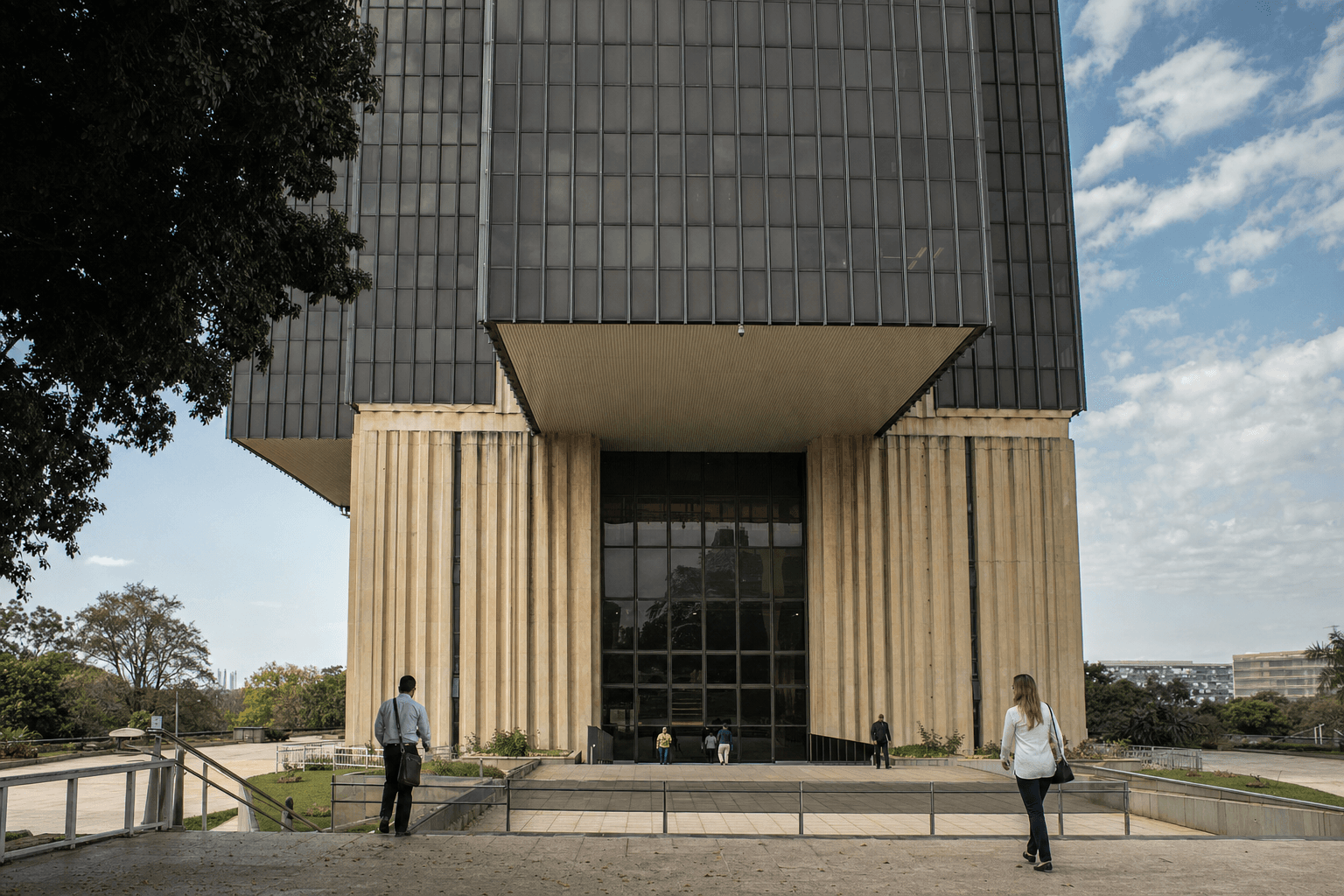
Brazil’s Central Bank has made another cautious move toward easier monetary policy, cutting the country’s benchmark interest rate by 0.25 percentage points to 13.75 percent a year.
The decision, announced in Brasília on 17 September 2026, was unanimous among members of the Monetary Policy Committee, known locally as Copom. It was the fifth consecutive reduction in the Selic, the reference rate that anchors borrowing costs across Latin America’s largest economy.
For international companies and investors, the signal is important but not yet transformational. Brazil still has one of the highest nominal policy rates among major emerging markets, and credit remains expensive for consumers and businesses. Even so, a continued easing cycle can gradually improve project finance conditions, working capital costs and valuations in rate-sensitive sectors such as retail, real estate, infrastructure and capital goods.
A rate cut with a cautious message
Copom’s statement made clear that the Central Bank is not treating the easing cycle as a straight line. Officials pointed to persistent uncertainty abroad, including armed conflict in the Middle East and questions over the direction of monetary policy in advanced economies.
The committee said the external backdrop remains uncertain and that emerging markets must proceed carefully in an environment of greater swings in asset and commodity prices. The decision also came despite risks linked to El Niño, which can affect food prices, energy conditions and logistics in Brazil.
That caution matters because Brazil is highly exposed to global financial conditions. When US and European rates stay elevated, emerging market assets can face pressure, the Brazilian real can weaken, and imported inflation can become harder to contain. Commodity volatility also feeds directly into corporate margins and government revenues, given Brazil’s role as a major exporter of agricultural products, oil, iron ore and other raw materials.
Inflation data opened the door
The immediate domestic backdrop has been more favourable. Brazil’s official inflation index, the IPCA, registered a 0.32 percent decline in August, its lowest monthly reading in four years. Over 12 months, inflation slowed to 4.22 percent from 4.44 percent in July.
The IPCA, or Broad National Consumer Price Index, is the main consumer inflation measure used by the Central Bank in setting monetary policy. Lower inflation gives policymakers more room to trim rates, provided they believe price pressures will remain contained.
There is still a gap between recent data and the formal inflation objective. In its late June Monetary Policy Report, the Central Bank raised its 2026 IPCA projection from 3.9 percent to 5.2 percent, although that forecast is expected to be revisited after the latest improvement in inflation readings.
Private sector economists are somewhat less pessimistic. The Central Bank’s Focus survey, a weekly poll of financial institutions widely watched by investors, points to inflation ending the year at 4.9 percent. That remains above the upper limit of Brazil’s inflation target range, which is 4.5 percent. Before the war in the Middle East began, market expectations had stood at 3.95 percent.
For companies planning pricing, procurement and debt strategies in Brazil, that distinction is critical. Inflation is easing, but it has not yet returned comfortably inside the target band. That means monetary easing may continue at a measured pace rather than through aggressive cuts.
Why the Selic matters for business
The Selic rate is the benchmark used in trading Brazilian government securities through the Special System for Settlement and Custody, the domestic infrastructure that gives the rate its name. In practice, it influences the cost of corporate loans, consumer credit, bank funding, fixed income yields and the discount rates applied to investment decisions.
When the Central Bank raises the Selic, it is trying to cool demand and reduce inflationary pressure. Higher rates make credit more expensive and tend to encourage saving. When it lowers the rate, financing conditions usually become less restrictive, supporting consumption and investment, but potentially reducing the margin of safety against inflation.
The latest cut therefore sits at the intersection of opportunity and restraint. Businesses may welcome the fifth consecutive reduction as evidence that Brazil is moving away from peak rates. Investors, however, will be watching whether inflation expectations improve enough to justify further easing.
For foreign companies, the practical takeaway is to monitor not just headline rate decisions, but the Central Bank’s guidance, the Focus survey, currency movements and commodity price trends. Together, they will shape the cost of capital and the risk premium attached to Brazilian assets over the coming months.
If your company is evaluating investment, expansion, acquisitions or partnerships in Brazil, connect with Brazil Business Club to understand the market context and build the right local relationships.
Doing business in Brazil?
Brazil Business Club connects investors and companies from around the world with the people and opportunities driving Brazil's economy. Tell us what you are looking for and we will help you take the next step.
Reported by the Brazil Business Club newsroom, with reference to Agência Brasil.