
Brazil Activity Gauge Falls More Than Expected in June
The Central Bank’s IBC-Br index declined 0.6% in June, a weaker result than market forecasts, as industry and services lost ground. Even so, the indicator remained positive over the quarter, the year to date, and the past 12 months.
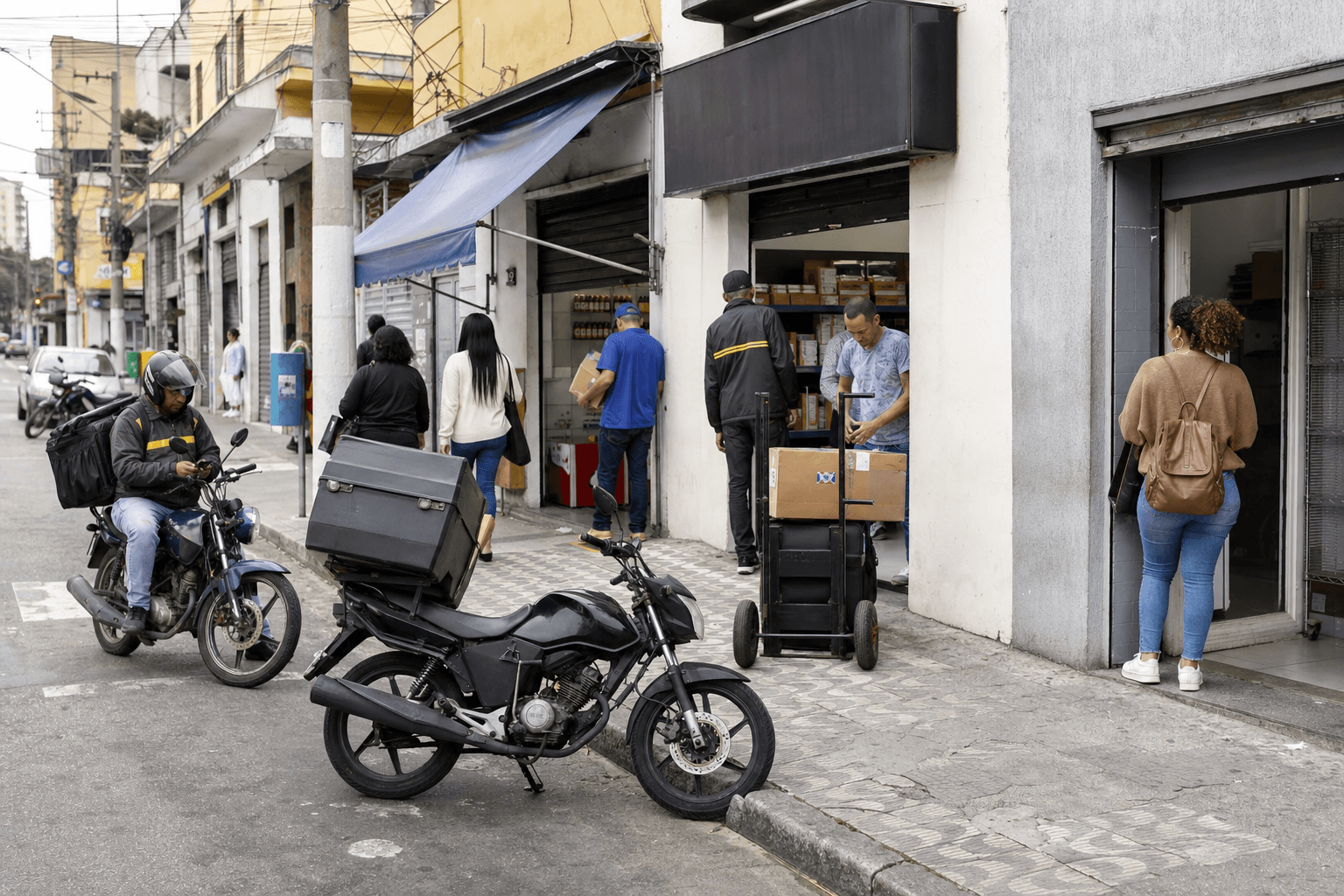
Brazil’s monthly proxy for economic activity delivered a softer reading in June, adding fresh evidence that momentum in Latin America’s largest economy cooled at the end of the first half of 2026.
The Central Bank’s Economic Activity Index, known locally as the IBC-Br, fell 0.6% in June from May on a seasonally adjusted basis. The result followed a 0.1% increase in May and was slightly weaker than the market consensus, which had pointed to a 0.5% decline.
The data were released by Brazil’s Central Bank on Monday, August 17, at 9 a.m. Brasília time. For international investors, the figure is watched closely because it offers an early read on the direction of the Brazilian economy before the release of official gross domestic product data.
Industry and services drag on the headline number
The June contraction came even though agriculture posted a 1% increase in the month. That gain was not enough to offset weaker performance in larger parts of the economy.
Industrial activity fell 1.4%, while services declined 0.5%. Taxes also decreased by 1%. When agriculture is excluded, the IBC-Br showed a sharper monthly drop of 0.9%, underlining the breadth of the slowdown outside the farm sector.
The sector mix matters for companies assessing Brazilian demand. Services represent a large share of domestic activity, while industry is closely tied to investment cycles, supply chains, credit conditions, and external demand. A simultaneous decline in both areas can influence expectations for sales, hiring, logistics needs, and capacity use across a wide range of sectors.
Still, the monthly figure does not point to a collapse in activity. On a rolling quarterly basis, the index rose 0.2% in the three months through June compared with the three months through March. Against June 2025, the indicator was up 2.4%.
For 2026 so far, the IBC-Br has accumulated growth of 1.5%. Over the 12 months through June, it also advanced 1.5%.
Why the IBC-Br matters for business planning
The IBC-Br is produced by Brazil’s Central Bank, the monetary authority responsible for interest rate policy and financial stability. The index combines information from major parts of the economy, including industry, commerce, services, and agriculture.
It is often described as a preliminary gauge of GDP, although it is not the official GDP number. Brazil’s official gross domestic product is calculated by the Brazilian Institute of Geography and Statistics, known as IBGE, the national statistics agency. The Central Bank itself treats the IBC-Br as a complementary indicator rather than a substitute for GDP.
Its value lies in timing. The index is published monthly and usually arrives around 45 days after the reference month, giving analysts and executives a relatively quick signal of whether the economy is accelerating or losing speed.
For multinational companies operating in Brazil, the indicator can help frame short term decisions. A weaker monthly print may encourage closer monitoring of consumer demand, order books, inventories, and credit conditions. The positive annual comparisons, however, suggest that the economy still retained growth over a broader horizon despite June’s loss of pace.
A mixed signal for investors
The June data offer a nuanced picture. The monthly decline was worse than expected and concentrated in sectors that are central to Brazil’s domestic economy. At the same time, the quarterly, annual, year to date, and 12 month comparisons remained in positive territory.
That combination is likely to keep attention on upcoming releases from the Central Bank and IBGE. Investors will be watching whether June was a temporary setback or the beginning of a more persistent moderation in activity.
For companies with exposure to Brazil, the message is to avoid reading too much into a single month while taking the sector detail seriously. Agriculture provided support, but industry and services weakened. That split can affect regional markets differently, particularly in a country where agribusiness, manufacturing, retail, logistics, and financial services often move on different cycles.
If you are evaluating investment, expansion, partnerships, or market entry in Brazil, connect with Brazil Business Club for practical insight and local context.
Doing business in Brazil?
Brazil Business Club connects investors and companies from around the world with the people and opportunities driving Brazil's economy. Tell us what you are looking for and we will help you take the next step.
Reported by the Brazil Business Club newsroom, with reference to Exame.