
Banco do Brasil confronts farm credit stress as borrowers resist restructuring
Banco do Brasil says a slice of medium and large agribusiness clients, mainly in the Central-West, is refusing to repay or renegotiate loans despite improved terms. The pressure has hit earnings and forced the state-controlled bank to cut its 2026 profit outlook.
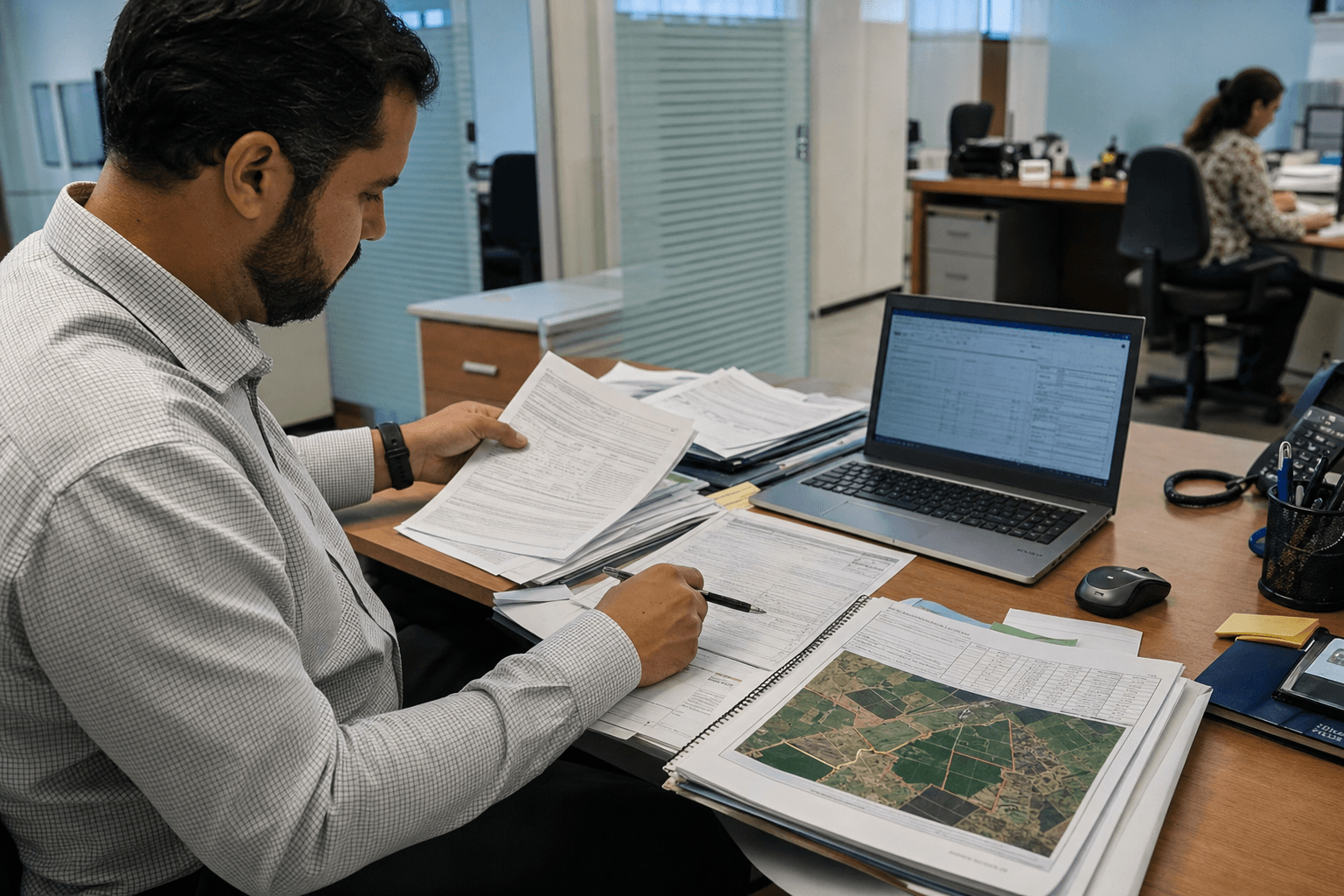
Banco do Brasil is facing a sharper than expected deterioration in its agribusiness loan book, with management saying some rural producers in default are neither repaying debt nor accepting restructuring proposals.
Tarciana Medeiros, president of the state-controlled bank, told analysts on Thursday, November 12, that the problem is concentrated among medium and large producers, especially in Brazil’s Central-West region. The borrowers cited by the bank are active in soybeans, corn and cattle, three pillars of the country’s agricultural export economy.
The issue is material for investors because Banco do Brasil is one of the financial institutions most exposed to rural credit in Brazil. Its third-quarter 2026 adjusted net income fell to BRL 1.27 billion, a 66.5 percent drop from the same period last year, as credit quality worsened in agribusiness.
Credit strain after strong harvests
According to Medeiros, the bank had offered debt restructuring programs on more favorable terms, but part of the delinquent client base declined to pay, renegotiate or provide additional collateral.
The bank’s concern is not that the entire sector is under pressure. Medeiros said about 90 percent of agribusiness borrowers are still paying on schedule. Rather, executives described a narrower but damaging group of clients whose behavior has been difficult to forecast.
“We did not anticipate the persistence and intentional nature of moral hazard,” Medeiros said.
In credit markets, moral hazard refers to the risk that a borrower delays or avoids meeting obligations because they expect better conditions later, such as softer renegotiation terms or another form of relief. Gilson Bittencourt, Banco do Brasil’s vice-president for agribusiness, said some producers may be postponing restructuring talks in the expectation that the bank will eventually offer more advantageous terms.
Medeiros drew a distinction between clients actively seeking a solution and those who remain in default without offering a path to regularize their position. “For those who do not negotiate and do not pay, the recourse is enforcement,” she said.
The comments come after record harvests in 2025 and 2026, which made the deterioration more striking for the bank’s management. Medeiros said some borrowers chose not to meet their financial commitments or seek alternatives to put their operations back on track, even after the strong production cycles.
Deterioration shows up in arrears
The bank’s indicators show a clear decline in payment discipline. Loans more than 90 days overdue in the agribusiness portfolio reached 6.92 percent in September 2026, up from 4.84 percent in September 2025. Transactions more than 30 days overdue stood at 10.10 percent in September.
Another measure, the on-time payment rate for installments due in October, was 66 percent. Credit costs booked in the third quarter reached BRL 21.2 billion.
The weaker performance has forced Banco do Brasil to reset expectations for the full year. Its adjusted net income forecast for 2026, previously between BRL 18 billion and BRL 22 billion, was cut to a range of BRL 9 billion to BRL 11 billion.
Medeiros said the bank had already detected atypical signs of deterioration in agribusiness payments in the first quarter of 2025. At the time, it suspended the publication of financial guidance because of uncertainty over the portfolio’s trajectory.
Since then, Banco do Brasil has stepped up collections, sought more collateral and pushed renegotiation. The bank said BRL 13.4 billion in agribusiness debt has been renegotiated, but participation has been below expectations. Only 15 percent of defaulting borrowers accepted the proposed terms.
Tighter collateral and legal recovery
Banco do Brasil is now using a broader set of tools to reduce losses. These include stronger collection and credit recovery procedures, higher collateral requirements for new loans, more legal action against debtors, the transfer of loss-making portfolios to specialist debt recovery firms and artificial intelligence to improve assessments of producers’ capacity to pay.
One important mechanism is fiduciary sale, known in Brazil as alienação fiduciária. Under this structure, the creditor retains ownership of the asset linked to the loan until the debt is settled. Medeiros said 80 percent of the 2026-2027 harvest is already covered by this form of security.
For international companies and investors, the episode is a reminder that Brazil’s agribusiness opportunity comes with credit, legal and regional risk. The Central-West remains a powerhouse for grains and cattle, but lenders are becoming more selective, and collateral quality is likely to matter more in farm finance negotiations.
Companies evaluating exposure to Brazilian agribusiness, banking, inputs or rural infrastructure should watch whether renegotiation uptake improves and whether legal enforcement changes borrower behavior. For guidance on investing in or doing business with Brazil, connect with Brazil Business Club.
Doing business in Brazil?
Brazil Business Club connects investors and companies from around the world with the people and opportunities driving Brazil's economy. Tell us what you are looking for and we will help you take the next step.
Reported by the Brazil Business Club newsroom, with reference to Agência Brasil.