
Banco do Brasil and KfW prepare EUR 100 million Amazon bioeconomy credit line
The planned financing would refinance Banco do Brasil lending to small producers, cooperatives, Indigenous peoples and local enterprises tied to sustainable Amazon supply chains. The operation doubles the size of a bioeconomy facility announced at COP30 in 2025.
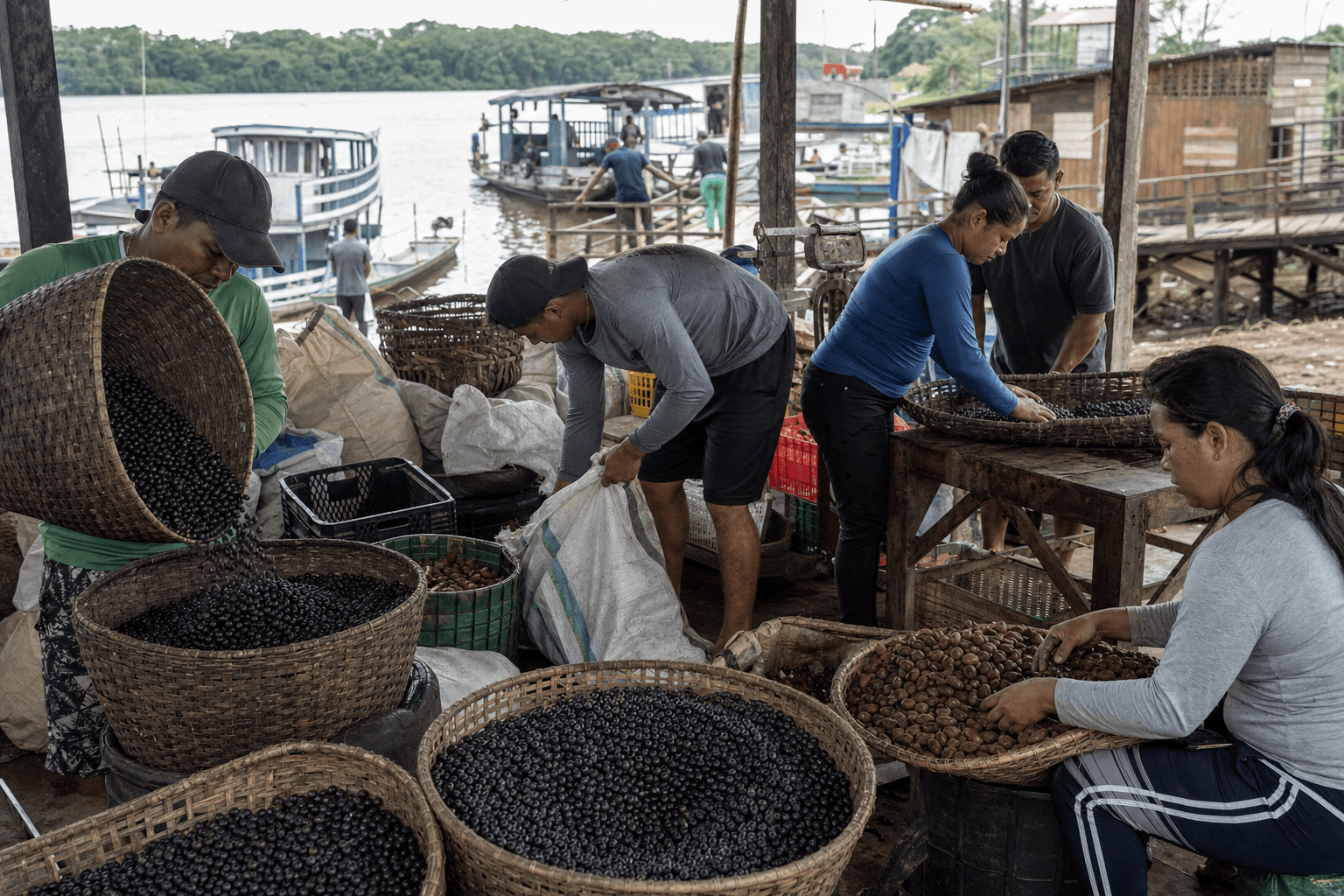
Banco do Brasil and Germany's KfW are advancing a EUR 100 million financing operation aimed at expanding credit for sustainable bioeconomy supply chains, with the Amazon as the main focus.
The initiative was presented on Wednesday, November 11, during COP31, through a joint statement under Brazil-Germany Financial Cooperation. The structure is designed to refinance credit already originated by Banco do Brasil, known as BB, for groups that often face high barriers to formal finance: small producers, family farmers, traditional communities, Indigenous peoples, cooperatives, and micro, small and medium-sized businesses.
For international investors tracking Brazil's climate and nature-based economy, the deal is notable because it channels development-bank capital through one of the country's largest financial institutions. Banco do Brasil is a major lender to agriculture and rural businesses, while KfW is Germany's development bank and a recurring partner in climate and sustainability finance.
Credit for forest-linked production
The operation is intended to widen access to loans for activities that turn biodiversity and sustainable natural resource use into income. In practice, that means finance for supply chains where production depends on keeping forests and ecosystems economically valuable rather than clearing them.
José Ricardo Sasseron, Banco do Brasil's vice-president for government and sustainability, said the strength of the bioeconomy depends on the financing conditions available to people who live and work in the region.
"When producers have the conditions to invest in sustainable activities and transform natural wealth into income, the benefits go beyond the credit transaction. They strengthen the local economy, generate new opportunities, and bring development and conservation closer together. It is this connection that we seek to expand through this partnership," Sasseron said in a statement.
Eligible activities under the Promotion of Sustainable Bioeconomy Supply Chains II project include a broad set of Amazon-linked products. Forest products such as açaí, Brazil nuts and babassu are covered, as are agroforestry systems for cacao, coffee and cupuaçu. The portfolio may also include aquaculture, sustainable fishing, tropical fish farming, tropical fruit and vegetable production, and timber from sustainable plantations in degraded areas.
Some loans may be linked to existing Brazilian rural credit programs, including Pronaf, the National Program for Strengthening Family Farming. Pronaf is a federal credit policy that supports small family-run farms and can include dedicated lines for bioeconomy and agroecology.
A larger Brazil-Germany facility
The new plan builds on a facility announced at COP30 in November 2025. At that time, Banco do Brasil disclosed EUR 50 million in funding, alongside a EUR 4.5 million grant from Germany's Federal Ministry for Economic Cooperation and Development, known by its German acronym BMZ. That grant was earmarked for counter-guarantees and technical assistance.
According to the announcement, the first phase benefited more than 4,500 families, including small producers, family farmers and traditional communities, particularly in the Amazon region.
The second phase would increase the expected loan volume from EUR 50 million to EUR 100 million. Banco do Brasil will be the borrower in the transaction and will be responsible for identifying, assessing, classifying and allocating eligible credit operations. KfW will provide the financing and monitor the project on behalf of Brazil-Germany Financial Cooperation.
The structure matters for companies and investors because it uses an established domestic lender to reach local producers, rather than relying only on standalone project finance. That can help reduce execution risk in fragmented rural supply chains, although the final impact will depend on credit uptake, technical support and compliance controls on the ground.
Safeguards and exclusions
The project will apply social and environmental criteria set by Banco do Brasil and KfW, together with international standards. These include Brazil's Forest Code, the country's core legal framework for native vegetation protection on rural properties, and BB's Social, Environmental and Climate Responsibility Policy, known as PRSAC.
The criteria also refer to standards of the International Finance Corporation, the private-sector arm of the World Bank Group, and conventions of the International Labour Organization.
The program excludes activities that do not fit its sustainability goals. Livestock farming, soybean production, oil palm cultivation and large monocultures above 500 hectares are not eligible. Areas where illegal deforestation took place after 2008 are also barred from receiving financing under the initiative.
For global businesses, those exclusions are commercially relevant. They indicate where concessional and sustainability-linked capital is likely to flow in Brazil's Amazon economy, and where reputational and compliance risks remain too high for this particular facility.
The financing is part of Banco do Brasil's broader Bioeconomy Strategy, which seeks to link productive inclusion, financial access, income generation, biodiversity conservation and climate mitigation.
For companies evaluating partnerships, sourcing strategies or investment opportunities in Brazil's sustainable economy, the message is clear: bioeconomy finance is becoming more institutionalised, but it will be tied to strict environmental and social filters. To understand how these developments could affect your Brazil strategy, connect with Brazil Business Club.
Doing business in Brazil?
Brazil Business Club connects investors and companies from around the world with the people and opportunities driving Brazil's economy. Tell us what you are looking for and we will help you take the next step.
Reported by the Brazil Business Club newsroom, with reference to Agência Brasil.